
OBESITY & BARIATRIC SURGERY
Gastric Bypass
Among the surgical options for significant weight loss, gastric bypass is one of the most established. It works in two ways at once, both reducing the size of the stomach and changing the route food takes through the digestive system, so that a person eats less and absorbs fewer calories. This dual action makes it a powerful operation for people with significant obesity, often with benefits for related health conditions. As a permanent surgical procedure, it is a serious decision made as part of a long-term commitment.
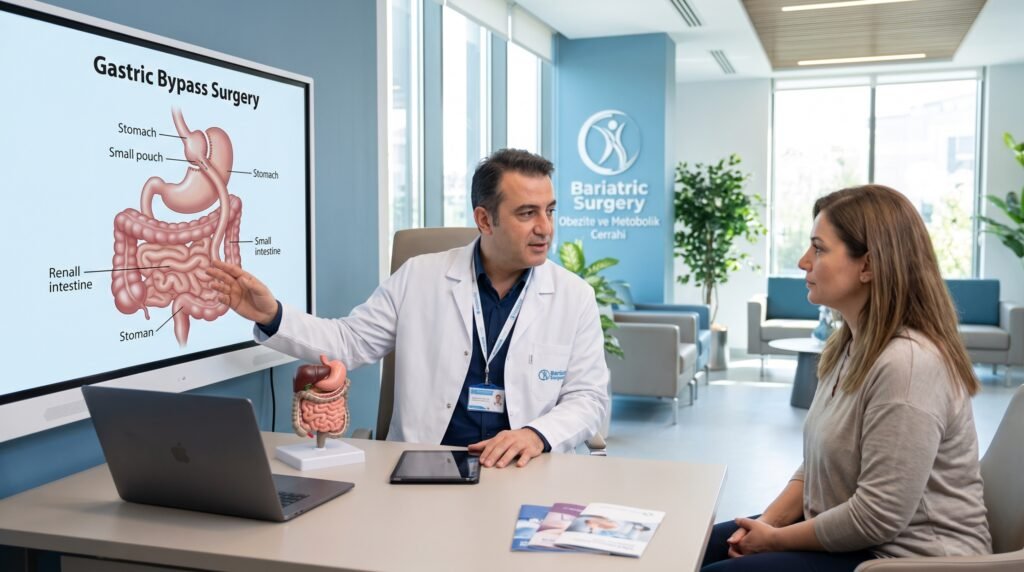
What Gastric Bypass Is
Gastric bypass is a bariatric operation that changes the stomach and the digestive route to support weight loss. The surgeon creates a small pouch from the upper part of the stomach, which becomes the new, much smaller stomach, and then connects this pouch directly to a lower part of the small intestine. Food passes into the small pouch and then into the intestine, bypassing most of the stomach and the first section of the small intestine. The operation is carried out under anesthesia, usually with a minimally invasive approach in suitable cases.
Orista is a health tourism facilitator that connects international patients with contracted hospitals and surgeons in Turkey. This page explains what gastric bypass involves, how it differs from other options, and what the commitment entails, so you can make an informed decision together with a qualified surgeon.
Two Mechanisms Working Together
What distinguishes gastric bypass is that it combines two effects. The first is restriction: the small stomach pouch holds much less, so a person feels full after eating a small amount. The second is a change in absorption: because food bypasses part of the digestive system, the body takes in fewer calories and nutrients. This dual action is why gastric bypass can be effective, but it is also why careful attention to nutrition and supplements afterward is essential, since the change in absorption affects how the body takes in important nutrients.

How It Differs From the Gastric Sleeve
It helps to compare gastric bypass with the gastric sleeve, the other common surgical option. The sleeve reduces the size of the stomach but does not reroute the intestine, so it works mainly through restriction. The bypass both reduces the stomach and changes the digestive route, adding the effect on absorption. Neither is simply better, and the right choice depends on the individual, their health, and the surgeon's assessment. The surgeon explains the differences and recommends the option that best fits the person's situation.
Effects Beyond Weight Loss
Gastric bypass is often associated with improvements in certain health conditions linked to obesity, which is part of why it is considered a medical rather than cosmetic treatment. Many people experience benefits for weight-related conditions, sometimes noticeably. These potential health benefits are an important part of why the operation is chosen, and the surgeon discusses what may be realistic in an individual's case as part of the assessment, without presenting any specific outcome as guaranteed.
A Permanent Change and a Lifelong Commitment
A crucial point to understand is that gastric bypass is a permanent change to the digestive system, and lasting success depends on a lifelong commitment. After surgery, patients follow a staged diet, make permanent changes to how and what they eat, take recommended nutritional supplements, often for life because of the change in absorption, and attend ongoing follow-up. This commitment is not optional but central to staying healthy and maintaining the result. Understanding it fully before surgery is essential, which the surgeon and team emphasize.
Who Is a Suitable Candidate?
Gastric bypass is generally considered for people whose weight is significantly above a healthy range, particularly when it affects their health, who have not achieved lasting results with other approaches, and who are ready for the permanent changes involved. Suitability is assessed medically, considering weight, health conditions, history, and readiness. The surgeon advises honestly on whether bypass is appropriate and whether it or another option fits best. A full assessment confirms suitability.
The Consultation and Planning
Care begins with a thorough assessment. The surgeon reviews your weight history, health, and related conditions, discusses your goals and readiness, and explains what gastric bypass involves, including the permanent nature, the risks, and the lifelong commitment. This is the stage to understand the operation fully and compare it with other options. For international patients, the assessment often begins remotely through medical information and is confirmed in person before surgery.
Recovery and Aftercare
Recovery from gastric bypass involves a hospital stay and a staged return to eating, usually starting with liquids and progressing gradually over weeks as the body adjusts. A period of limited activity follows. Aftercare is a central and ongoing part of the process, including dietary guidance, nutritional supplements, and regular follow-up and monitoring, often long term. Because international patients travel home afterward, planning how this ongoing care continues is especially important, and the team provides clear long-term guidance.
Risks and Considerations
As major surgery that permanently changes the digestive system, gastric bypass carries significant considerations that must be understood in advance. These include the general risks of surgery and anesthesia, considerations specific to the operation, and longer-term effects on nutrition that require lifelong supplements and monitoring because of the change in absorption. An honest and thorough discussion of the risks, the benefits, and the lifelong commitment is an essential part of the consultation, and no responsible surgeon presents it as an easy or guaranteed solution.
Gastric Bypass in Turkey
Turkey is a frequent destination for bariatric surgery, supported by contracted hospitals in Istanbul and other cities with modern operating facilities and experienced surgeons. For international patients, combining surgery with organized travel, accommodation, and aftercare support makes the experience easier to manage, while the importance of lifelong follow-up means planning for ongoing care matters too.
How Orista Supports You
As a facilitator, Orista coordinates the steps around your surgery. Your medical information can be reviewed by the medical team before you travel, you are matched with a suitable surgeon and hospital, and a dedicated representative stays in contact throughout. Transfers, accommodation, translation, and aftercare support can be arranged so your attention stays on your health and recovery.
GOOD TO KNOW
Frequently Asked Questions
How does gastric bypass work?+
It combines two effects: a small stomach pouch restricts how much you can eat, and rerouting the intestine means the body absorbs fewer calories and nutrients. This dual action is why nutrition and supplements afterward are essential.
What is the difference between bypass and sleeve?+
The sleeve reduces the stomach and works mainly through restriction, while the bypass both reduces the stomach and reroutes the intestine, adding an effect on absorption. Neither is simply better, and the surgeon recommends the option that fits you.
Is gastric bypass permanent?+
Yes. It is a permanent change to the digestive system, and lasting success depends on a lifelong commitment to dietary changes, nutritional supplements, often for life, and ongoing follow-up.
Why are lifelong supplements needed?+
Because the operation changes how the body absorbs nutrients, recommended supplements are often needed for life, alongside regular monitoring, to maintain good nutrition and health.
Am I a candidate?+
Suitability is assessed medically, considering weight, health conditions, history, and readiness for the permanent changes. The surgeon advises honestly on whether bypass or another option fits best.
This content is for general informational purposes only and does not constitute medical advice, diagnosis, or treatment. Suitability, methods, and outcomes differ from person to person, and all surgery carries risks. Gastric bypass is a permanent change requiring lifelong commitment and follow-up. Please consult a qualified surgeon or specialist for an assessment and personalized guidance before making any decision about gastric bypass.