
PLASTIC SURGERY
Blepharoplasty (Eyelid Surgery)
The eyes are often the first place that reveals tiredness or age. Loose skin on the upper lids, puffiness, and bags beneath the eyes can make a person look weary even when they feel rested. Blepharoplasty, or eyelid surgery, addresses these changes by removing or repositioning excess skin, muscle, and fat around the eyes. Beyond refreshing the appearance, in some cases it can also improve vision when heavy upper lids interfere with the field of sight.
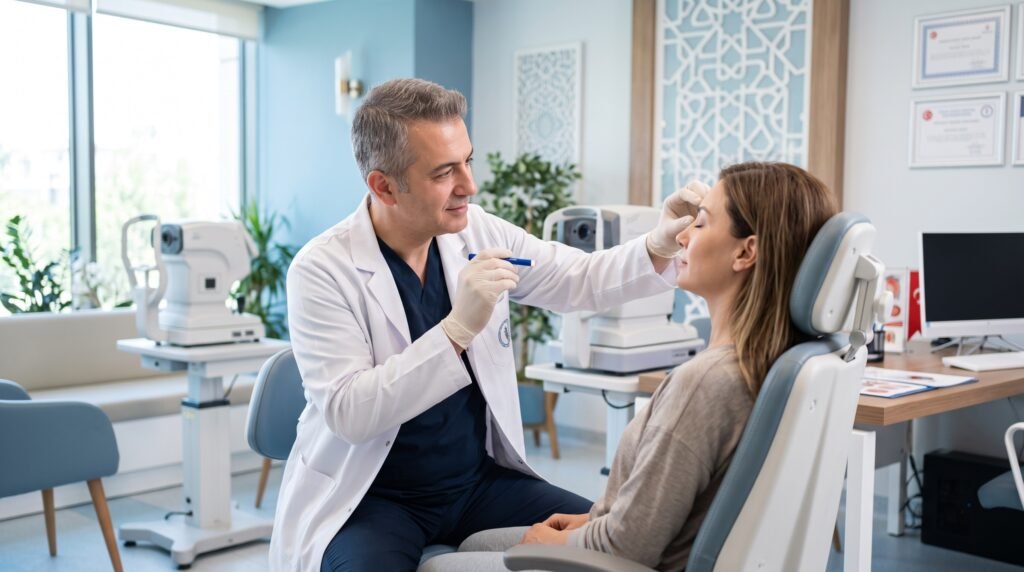
What Blepharoplasty Is
Blepharoplasty is an operation that improves the appearance of the eyelids by addressing excess skin, muscle, and fat. On the upper lids it removes drooping, hooded skin, and on the lower lids it addresses bags and puffiness. The aim is a more open, rested look around the eyes while keeping a natural appearance. The operation is carried out under anesthesia, and the plan depends on whether the upper lids, lower lids, or both are being treated.
Orista is a health tourism facilitator that connects international patients with contracted hospitals and surgeons in Turkey. This page explains what eyelid surgery involves, the difference between upper and lower lid work, and what recovery is like, so you can make an informed decision together with a qualified surgeon.
Upper and Lower Eyelid Surgery
Eyelid surgery is tailored to the specific concern, and the two areas are often considered separately.
Upper Eyelid Surgery
This addresses excess, sagging skin on the upper lids that can create a hooded look and, in some cases, weigh on the eye. The incision is usually placed in the natural crease of the upper lid, where the resulting scar is well hidden.
Lower Eyelid Surgery
This addresses bags, puffiness, and excess skin beneath the eyes. Depending on the case, the incision may be placed just below the lash line or, in some approaches, inside the lower lid, which leaves no external scar. The surgeon selects the method based on the concern.
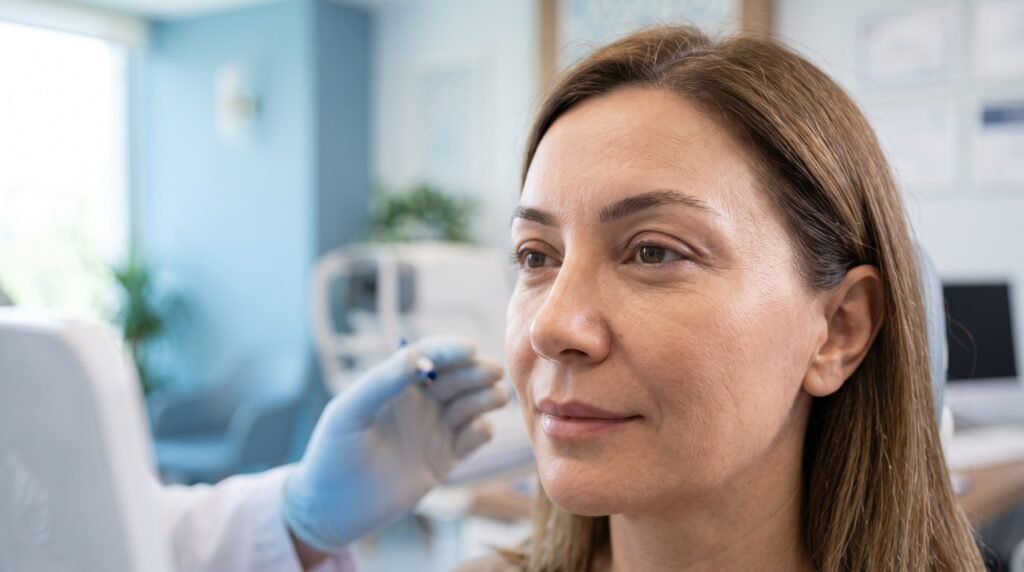
A Functional as Well as Aesthetic Procedure
While eyelid surgery is often sought to refresh the appearance, it is worth noting that heavy upper eyelids can sometimes affect vision. When excess skin hangs low enough to interfere with the upper field of sight, removing it can improve both the look and the function of the eye. A surgeon assesses whether this applies in your case, which is one of the points that makes a thorough examination important.
The Relationship With a Brow Lift
The upper eye and the brow are closely linked, so the assessment considers both. A descended brow can make the upper lids look heavier than they are, in which case lifting the brow may be more appropriate than, or combined with, eyelid surgery. In other cases the eyelid itself is the main issue. The surgeon examines the brow and the lids together to recommend the right approach, which is clarified during the consultation.
The Consultation and Planning
A careful consultation begins the process. The surgeon examines the eyelids and the area around the eyes, assesses the skin, fat, and the position of the brow, reviews your medical history including any eye conditions, and discusses your goals. This is the stage to understand the technique, the scars, the recovery, and what result is realistic. For international patients, the assessment often begins remotely with photographs and information and is confirmed in person before surgery.
How the Operation Is Performed
Blepharoplasty is often carried out under local anesthesia with sedation, though general anesthesia may be used depending on the extent. For the upper lids, the surgeon removes excess skin and, if needed, a small amount of muscle or fat through an incision in the natural crease. For the lower lids, excess skin and fat are addressed through an incision below the lash line or inside the lid. The incisions are then closed with fine sutures. The operation generally takes a couple of hours depending on how much is treated.
Who Is a Suitable Candidate?
Blepharoplasty is generally considered by adults in good general health with excess eyelid skin, puffiness, or bags, realistic expectations, and no eye or medical conditions that would make surgery unsafe. The surgeon reviews eye health as part of the assessment. Surgeons usually advise stopping smoking before and after the operation, since it affects healing. A full assessment is the only reliable way to confirm suitability.
Recovery and the Healing Timeline
Recovery follows a predictable pattern, so planning the length of stay and follow-up is important for international patients.
- Swelling and bruising around the eyes are common early on and settle over the following weeks
- The eyes may feel dry, tight, or sensitive to light for a short period
- Cold compresses and keeping the head elevated can help in the early days, as advised
- Most people feel presentable after one to two weeks, with the final result settling over months
Risks and Considerations
As a surgical procedure, blepharoplasty carries risks that should be understood in advance. These include the general risks of surgery and anesthesia, bleeding, infection, and scarring, as well as considerations specific to the eyes, such as dryness, irritation, temporary blurred vision, difficulty closing the eyes fully, asymmetry, or a result that does not fully match expectations. Because this is surgery close to the eye, choosing an experienced surgeon is especially important. An honest and thorough discussion of the risks and realistic outcomes is an essential part of the consultation, and no responsible surgeon guarantees a specific result.
Eyelid Surgery in Turkey
Turkey is a frequent destination for facial plastic surgery, supported by contracted hospitals in Istanbul and other cities with modern operating facilities and experienced surgeons. For international patients, combining surgery with organized travel, accommodation, and aftercare support makes the overall experience easier to manage, allowing attention to stay on recovery.
How Orista Supports You
As a facilitator, Orista coordinates the steps around your surgery. Your information and photographs can be reviewed by the medical team before you travel, you are matched with a suitable surgeon and hospital, and a dedicated representative stays in contact throughout. Transfers, accommodation, translation, and aftercare support can be arranged so your attention stays on recovery.
GOOD TO KNOW
Frequently Asked Questions
Can eyelid surgery improve my vision?+
In some cases, yes. When heavy upper eyelid skin hangs low enough to interfere with the upper field of sight, removing it can improve both appearance and vision. The surgeon assesses whether this applies to you.
Where are the scars?+
Upper lid incisions are usually hidden in the natural crease. Lower lid incisions may be just below the lash line or, in some approaches, inside the lid, which leaves no external scar. The surgeon explains the method for your case.
Should I consider a brow lift instead?+
Sometimes. A descended brow can make the upper lids look heavy, so a brow lift may be more suitable or combined with eyelid surgery. The surgeon assesses the brow and lids together.
How long is the recovery?+
Swelling and bruising settle over the first weeks, and most people feel presentable after one to two weeks. The final result settles over months.
Is it done under general anesthesia?+
It is often carried out under local anesthesia with sedation, though general anesthesia may be used depending on the extent. The surgeon decides based on the case.
This content is for general informational purposes only and does not constitute medical advice, diagnosis, or treatment. Suitability, methods, and outcomes differ from person to person, and all surgery carries risks. Please consult a qualified surgeon or specialist for an assessment and personalized guidance before making any decision about an eyelid surgery procedure.