
EYE DISEASES
Presbyopia
Somewhere around middle age, most people notice the same change: reading a menu or a phone screen suddenly requires holding it further away, and small print becomes harder to focus on. This is presbyopia, the natural, age-related loss of the eye's ability to focus on near objects. It is not a disease but a normal part of aging that affects nearly everyone in time. The reassuring part is that it is very manageable, with options ranging from simple reading glasses to lens-based treatments. Understanding presbyopia helps clarify the choices available.

What Presbyopia Is
Presbyopia is the gradual loss of the eye's ability to focus on close objects, which comes with age. The eye focuses on near objects by changing the shape of its natural lens, a process that relies on the lens staying flexible. With age, the lens gradually becomes less flexible, so the eye finds it harder to focus up close, and near tasks such as reading become more difficult. It is a normal part of aging rather than a disease, and because it affects the focusing lens, it is distinct from other vision problems, though it can occur alongside them.
Orista is a health tourism facilitator that connects international patients with contracted hospitals and physicians in Turkey. This page explains what presbyopia is, how it is managed, and what options exist, so you can plan the right approach together with a qualified eye specialist.
How Presbyopia Differs From Other Vision Problems
It helps to distinguish presbyopia from the refractive errors people may have had earlier in life. Short-sightedness, long-sightedness, and astigmatism relate to the overall shape of the eye and can affect people at any age. Presbyopia, by contrast, is specifically the age-related loss of near focus due to the lens becoming less flexible. A person can have presbyopia on top of an existing refractive error, which is why someone who already wears glasses may find they also need help for reading as they get older. The specialist assesses the whole picture of a person's vision.
Recognizing Presbyopia
The signs of presbyopia are familiar to many people in and beyond middle age.
- Difficulty focusing on small print, such as menus, phones, or books
- Holding reading material further away to see it clearly
- Eye strain or tiredness when doing close work
- Needing brighter light for reading
These signs usually begin gradually around middle age and develop over time. An eye examination confirms presbyopia and checks for any other vision needs.
The Options for Managing Presbyopia
A reassuring aspect of presbyopia is the range of options for managing it, from simple to more involved. The most straightforward is reading glasses, or varifocal and bifocal glasses that combine near and distance correction. Contact lens options also exist. For those who prefer not to rely on glasses, lens-based procedures such as smart lens treatment can replace the eye's natural lens with one designed to provide focus at near, intermediate, and distance ranges, reducing the need for reading glasses. The right choice depends on the person's eyes, lifestyle, and preferences, which the specialist discusses.
Glasses and Contact Lens Options
For many people, glasses are a simple and effective answer to presbyopia. Reading glasses help with near tasks, while varifocal or bifocal lenses allow a person to see clearly at different distances through one pair. Multifocal contact lenses are another option for those who prefer not to wear glasses. These approaches are straightforward and easily adjusted as presbyopia develops over time. The specialist can advise on what suits a person's needs and lifestyle, and glasses or lenses are often the first and most convenient option.
Lens-Based Treatment for Presbyopia
For those who would prefer to reduce their dependence on glasses, a lens-based procedure may be an option. Smart lens treatment, a form of refractive lens exchange, replaces the eye's natural lens with an advanced artificial lens designed to focus at multiple distances, which can address presbyopia as well as other vision needs. Because it replaces the natural lens, it also prevents a cataract from forming later. This is a more involved option than glasses, suited to certain people, and the specialist assesses suitability and explains what it involves, so the choice fits the individual.
The Consultation and Planning
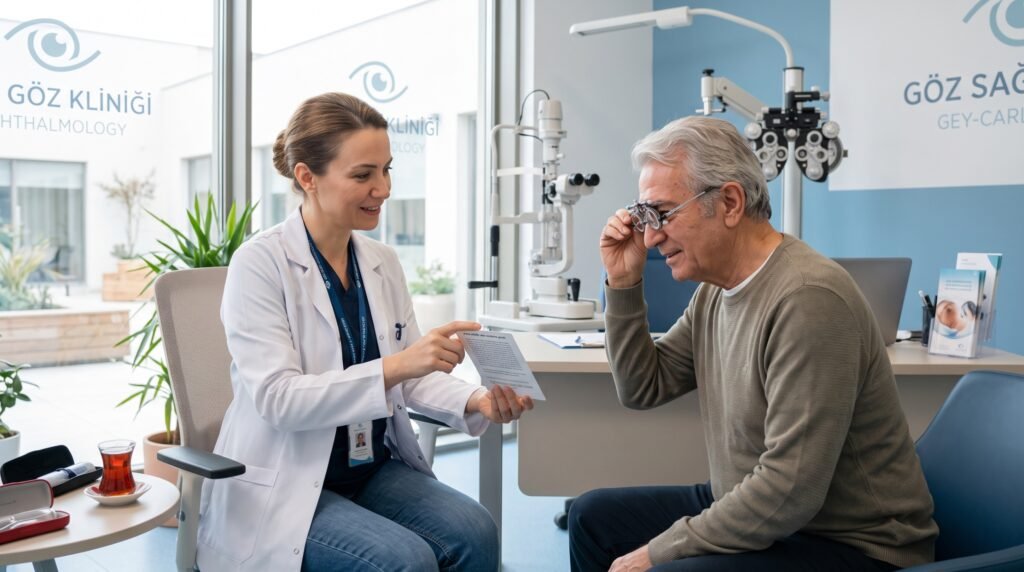
Care begins with an eye examination that assesses near and distance vision and the health of the eyes. The specialist confirms presbyopia, checks for any other vision needs, and discusses the options, from glasses and contact lenses to lens-based treatment, explaining what each involves and what suits the person. For international patients interested in a procedure, an initial discussion can often begin remotely, with detailed examination and planning during the visit, since lens-based treatment requires precise assessment of the eye.
Presbyopia Care in Turkey
Turkey is a frequent destination for eye care, supported by contracted hospitals in Istanbul and other cities with modern facilities and experienced specialists. For international patients considering a lens-based treatment for presbyopia, combining care with organized travel, accommodation, and aftercare support makes the experience easier to manage, allowing attention to stay on the care and recovery.
How Orista Supports You
As a facilitator, Orista coordinates the steps around your care. Your medical information can be reviewed by the medical team before you travel, you are matched with a suitable eye specialist and hospital, and a dedicated representative stays in contact throughout. Transfers, accommodation, translation, and aftercare support can be arranged so your attention stays on your eyes and recovery.
GOOD TO KNOW
Frequently Asked Questions
What is presbyopia?+
It is the age-related loss of the eye's ability to focus on close objects, as the natural lens becomes less flexible with age. It is a normal part of aging rather than a disease, affecting nearly everyone in time, and is very manageable.
How is it different from needing glasses before?+
Earlier vision problems like short- or long-sightedness relate to the shape of the eye and can affect any age. Presbyopia is specifically the age-related loss of near focus, and it can occur on top of an existing refractive error.
What are the options for managing it?+
They range from reading, varifocal, or bifocal glasses and multifocal contact lenses to lens-based procedures such as smart lens treatment, which can reduce the need for reading glasses. The right choice depends on your eyes, lifestyle, and preferences.
Can presbyopia be treated without glasses?+
For those who prefer to reduce their dependence on glasses, a lens-based procedure such as smart lens treatment may be an option, replacing the natural lens with one that focuses at multiple distances. The specialist assesses suitability.
When does presbyopia start?+
It usually begins gradually around middle age and develops over time. An eye examination confirms it and checks for any other vision needs, so the right option can be chosen.
This content is for general informational purposes only and does not constitute medical advice, diagnosis, or treatment. Suitability, methods, and outcomes differ from person to person, and any procedure carries risks. Please consult a qualified eye specialist for an examination and personalized guidance regarding presbyopia.