
GENERAL SURGERY
Pancreas Problems
The pancreas is a quietly vital organ, helping digest food and regulate blood sugar, yet problems with it can be serious and are not always easy to identify. Pancreatic conditions range from inflammation to growths and other disorders, and they often need careful assessment by experienced specialists. Understanding what the pancreas does and what can go wrong helps patients approach these conditions with clearer expectations about diagnosis and treatment.

The Pancreas and What It Does
The pancreas is a gland that sits deep in the upper abdomen, behind the stomach. It has two main roles. It produces enzymes that are released into the digestive system to help break down food, and it produces hormones, including insulin, that regulate blood sugar. Because it is involved in both digestion and metabolism, problems with the pancreas can affect the body in different ways. Its deep position also means that pancreatic conditions can be harder to assess than those of more accessible organs.
Orista is a health tourism facilitator that connects international patients with contracted hospitals and surgeons in Turkey. This page explains common pancreatic problems, how they are assessed, and how they may be managed, so you can plan the right approach together with a qualified specialist.
Conditions That Can Affect the Pancreas
The pancreas can be affected by several kinds of problems, which differ greatly in nature and treatment.
- Inflammation of the pancreas, known as pancreatitis, which can be sudden or long-standing
- Cysts and fluid collections within or around the pancreas
- Growths and tumors, which require careful specialist assessment
- Conditions affecting the pancreatic ducts and the flow of enzymes
Because these conditions are so different, a precise diagnosis is essential before any treatment is planned, and a specialist determines what is involved.
Recognizing the Symptoms
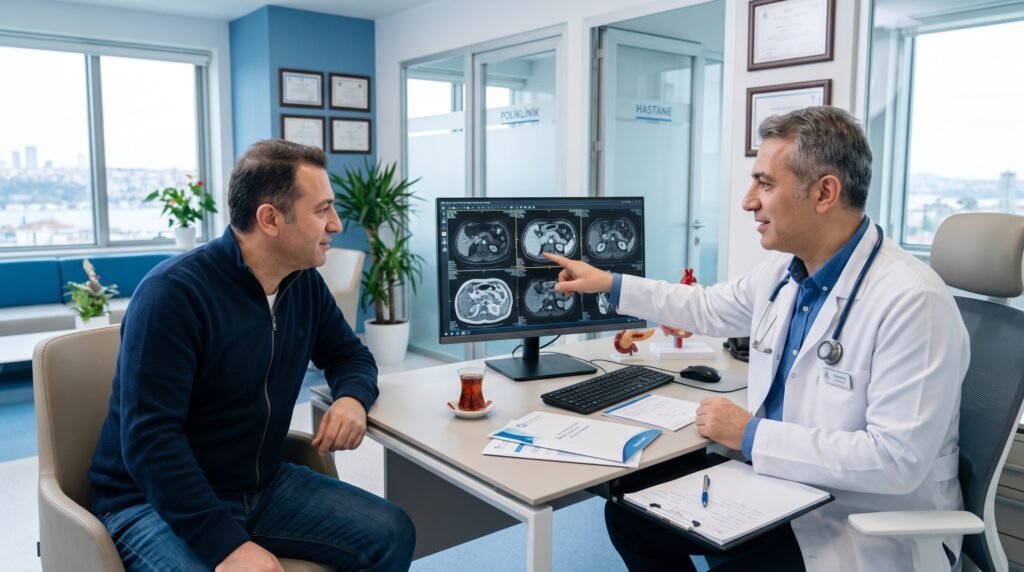
Pancreatic problems can produce a range of symptoms, and some can be vague, which is part of why they need careful assessment. Common signs include pain in the upper abdomen that may spread to the back, nausea, vomiting, and changes in digestion. Long-standing problems can affect how food is absorbed, leading to weight loss or changes in the stool. Because these symptoms can have many causes, a specialist assessment is important to determine whether the pancreas is involved and what the problem is.
The Importance of Careful Assessment
A defining feature of pancreatic conditions is that they require thorough and often detailed investigation. Because the pancreas sits deep in the body and its conditions vary so much, reaching an accurate diagnosis may involve a combination of tests. The specialist takes a history, examines you, and uses investigations such as blood tests and detailed imaging, which may include CT, MRI, or specialized endoscopic techniques, chosen for the situation. This careful approach is essential to understand the problem correctly before deciding on treatment, since the right diagnosis shapes everything that follows.
How Pancreatic Problems Are Managed
Treatment depends entirely on the specific condition and is always tailored to the individual. Some conditions are managed with medical treatment, supportive care, and monitoring, while others may require a procedure or surgery. Pancreatic surgery is specialized and is carried out by experienced surgical teams when it is the right course. Because the pancreas is involved in digestion and blood sugar, management may also address nutrition and related needs. The specialist explains the proposed approach for the specific condition and what it involves.
The Consultation and Planning
Care begins with a careful assessment. The specialist reviews your symptoms, medical history, and any previous scans or results, examines you, and arranges the investigations needed to reach a clear diagnosis. Because pancreatic conditions can be complex, this assessment is thorough. For international patients, it often begins remotely through your medical information and imaging, so the right specialist can be identified and a plan discussed, with further assessment and planning during your visit.
Pancreatic Care in Turkey
Turkey is a destination for a wide range of medical care, supported by contracted hospitals in Istanbul and other cities with modern facilities and experienced specialists. For international patients, combining care with organized travel, accommodation, and support services makes the overall experience easier to manage, which is especially helpful for conditions that need detailed assessment.
How Orista Supports You
As a facilitator, Orista coordinates the steps around your care. Your medical information and imaging can be reviewed by the medical team before you travel, you are matched with a suitable specialist and hospital, and a dedicated representative stays in contact throughout. Transfers, accommodation, translation, and aftercare support can be arranged so your attention stays on your health.
GOOD TO KNOW
Frequently Asked Questions
What does the pancreas do?+
It has two main roles: producing enzymes that help digest food and producing hormones, including insulin, that regulate blood sugar. Because it is involved in both, pancreatic problems can affect the body in different ways.
Why do pancreatic conditions need such careful assessment?+
The pancreas sits deep in the body and its conditions vary widely, so reaching an accurate diagnosis may involve a combination of tests, including detailed imaging. The right diagnosis shapes the treatment that follows.
Do all pancreatic problems need surgery?+
No. Treatment depends on the condition. Some are managed with medical treatment, supportive care, and monitoring, while others may require a procedure or surgery. The specialist explains the right approach for the specific condition.
What symptoms are associated with the pancreas?+
Common signs include upper abdominal pain that may spread to the back, nausea, vomiting, and changes in digestion or weight. Because these can have many causes, a specialist assessment is important.
How do I start as an international patient?+
The assessment often begins remotely through your medical information and imaging, so the right specialist can be identified and a plan discussed, with further assessment during your visit.
This content is for general informational purposes only and does not constitute medical advice, diagnosis, or treatment. Suitability, methods, and outcomes differ from person to person. Pancreatic conditions can be serious and need specialist assessment. If you have severe abdominal pain, seek medical help promptly. Please consult a qualified specialist for an assessment and personalized guidance regarding pancreatic symptoms.