
EYE DISEASES
Retina
At the very back of the eye lies the retina, a thin layer of tissue that captures light and turns it into the signals the brain reads as sight. Because it is so central to vision, conditions affecting the retina can be serious, and some need prompt attention to protect sight. Retinal care covers the diagnosis and treatment of these conditions, from those linked to aging or other health problems to sudden events that threaten vision. Understanding the warning signs helps patients know when to seek care quickly.
What the Retina Is and Does
The retina is the light-sensitive layer lining the back of the inside of the eye. When light enters the eye and is focused by the cornea and lens, it lands on the retina, which converts it into signals sent along the optic nerve to the brain. A central part of the retina, the macula, is responsible for the detailed, central vision used for reading and recognizing faces. Because the retina is where sight truly begins, keeping it healthy is essential to vision, and damage to it can affect sight in ways that other parts of the eye cannot compensate for.
Orista is a health tourism facilitator that connects international patients with contracted hospitals and physicians in Turkey. This page explains what retinal conditions involve, how they are assessed, and how they may be treated, so you can plan the right approach together with a qualified eye specialist.
Conditions That Affect the Retina
A range of conditions can affect the retina, differing in cause and urgency, and the following are examples.
- Retinal detachment, where the retina separates from the back of the eye, a serious event
- Conditions affecting the macula, the center of detailed vision
- Retinal problems linked to other health conditions
- Changes in the retina associated with aging
- Other conditions of the retina and the back of the eye
Each condition is assessed individually, and the specialist explains its nature and what treatment, if any, is needed.
Warning Signs That Need Prompt Attention
A crucial point about retinal conditions is that some are urgent, and certain symptoms should never be ignored. Sudden signs that need prompt assessment include a sudden increase in floaters, specks or shapes drifting across vision, flashes of light, a shadow or curtain moving across the field of vision, or a sudden change or loss of vision. These can be signs of a retinal detachment or another serious problem, where prompt treatment can make an important difference to protecting sight. Anyone experiencing such symptoms should seek urgent eye care.
How Retinal Conditions Are Assessed
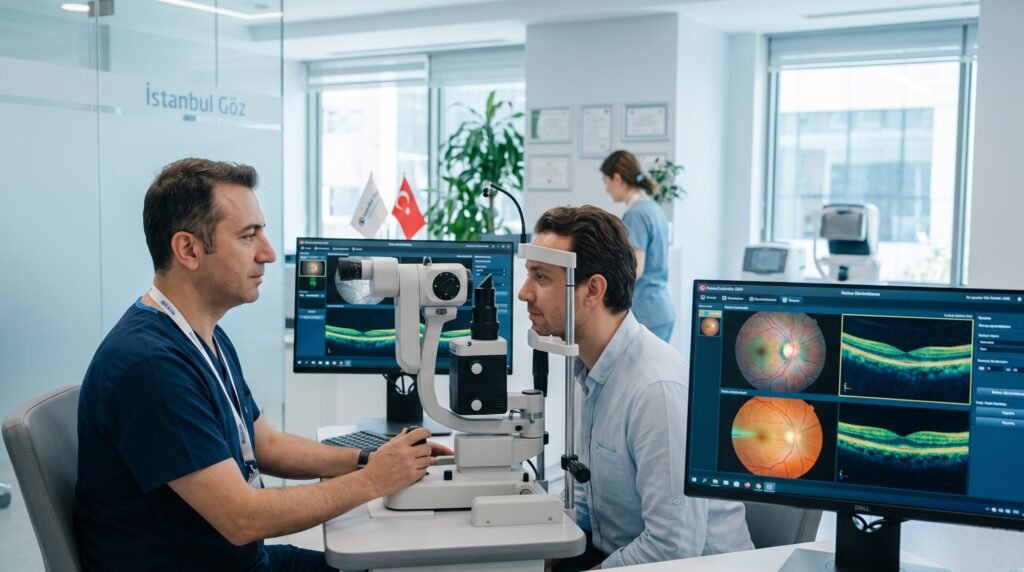
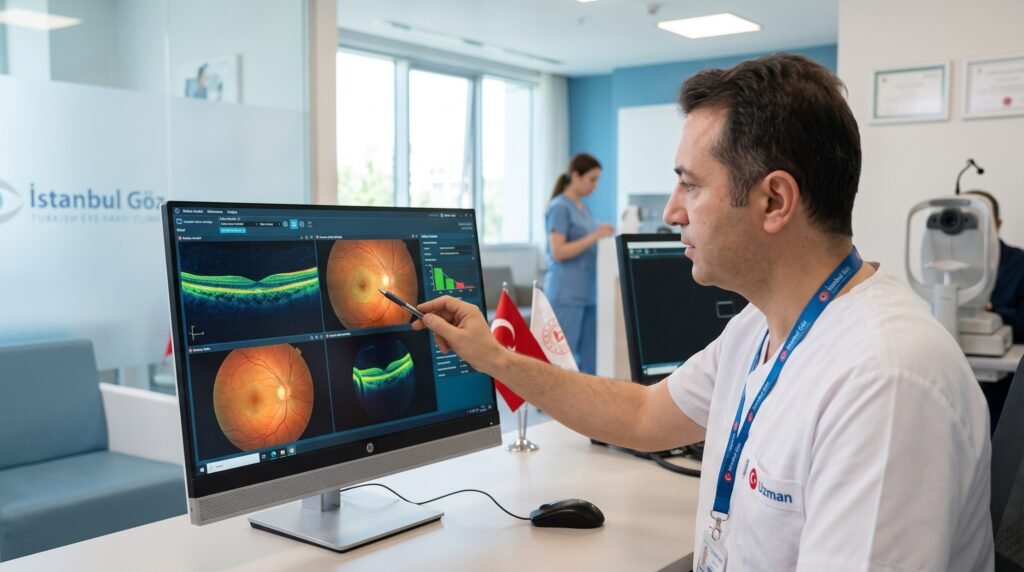
Assessing the retina requires examining the back of the eye, which the specialist does using detailed examination and modern imaging. After widening the pupil with drops to see inside, the specialist examines the retina, and scans such as detailed imaging of the retinal layers help map the condition precisely. These investigations allow the specialist to understand the problem, its extent, and how it affects vision, which guides the decision on treatment. This careful assessment is essential, since retinal conditions vary widely and the right treatment depends on an accurate picture.
How Retinal Conditions Are Treated
Treatment depends entirely on the specific condition and is tailored to the individual. Some retinal conditions are managed with monitoring or medical treatment, others with laser treatment applied to the retina, and some require surgery carried out by a retinal specialist. Certain conditions are treated with injections into the eye given by a specialist. A retinal detachment, in particular, usually needs prompt surgical treatment to reattach the retina. The specialist explains the recommended approach for the specific condition, including what it involves and what is realistic.
The Importance of Specialist Care
Retinal conditions call for specialized expertise, since the retina is delicate and its treatment, whether laser, injection, or surgery, requires particular skill. A retinal specialist has the training and equipment to assess and treat these conditions precisely. This is especially important for serious or urgent problems, where the right treatment at the right time matters to protecting sight. Seeking specialist assessment for a suspected retinal condition, particularly when warning signs are present, is the sensible course.
The Consultation and Planning
Care begins with a thorough eye examination focused on the retina. The specialist examines the back of the eye, uses appropriate imaging, discusses the symptoms and findings, and explains the condition and the treatment options. For urgent conditions, prompt assessment is the priority. For non-urgent conditions, international patients can often begin with a discussion through medical information, with detailed examination and planning during the visit. The specialist advises on timing, particularly where a condition needs prompt care.
Retinal Care in Turkey
Turkey is a frequent destination for eye care, supported by contracted hospitals in Istanbul and other cities with modern facilities and experienced specialists, including in retinal conditions. For international patients with non-urgent conditions, combining care with organized travel, accommodation, and support services makes the experience easier to manage, while urgent retinal problems need prompt care wherever the person is.
How Orista Supports You
As a facilitator, Orista coordinates the steps around your care. Your medical information and any eye scans can be reviewed by the medical team before you travel, you are matched with a suitable retinal specialist and hospital, and a dedicated representative stays in contact throughout. Transfers, accommodation, translation, and aftercare support can be arranged so your attention stays on your eyes.
GOOD TO KNOW
Frequently Asked Questions
What does the retina do?+
It is the light-sensitive layer at the back of the eye that converts light into signals sent to the brain. Its central part, the macula, provides the detailed vision used for reading and recognizing faces. Damage to it affects sight directly.
What symptoms are a warning sign?+
Sudden floaters, flashes of light, a shadow or curtain across vision, or a sudden change or loss of vision need prompt assessment, as they can signal a retinal detachment or another serious problem. Seek urgent eye care if these occur.
How are retinal conditions assessed?+
The specialist examines the back of the eye after widening the pupil with drops and uses detailed imaging of the retina. These investigations map the condition precisely, which guides treatment.
How are they treated?+
Treatment depends on the condition and may involve monitoring, medical treatment, laser, injections into the eye, or surgery. A retinal detachment usually needs prompt surgery. The specialist explains the approach for the specific condition.
Why is specialist care important?+
The retina is delicate, and its treatment requires particular skill and equipment. A retinal specialist can assess and treat these conditions precisely, which matters especially for serious or urgent problems.
This content is for general informational purposes only and does not constitute medical advice, diagnosis, or treatment. Suitability, methods, and outcomes differ from person to person. Some retinal conditions are urgent: sudden floaters, flashes, a shadow across vision, or sudden vision loss need urgent eye care. Please consult a qualified eye specialist for an examination and personalized guidance regarding a retinal condition.