
PLASTIC SURGERY
Face Lifting
Over time the face changes in ways that creams and injections can only partly address. The skin loosens, the deeper support slackens, and the jaw and neckline lose their definition. A surgical face lift, known medically as a rhytidectomy, is designed for more advanced signs of aging, repositioning the deeper tissues and removing excess skin to restore a firmer, more rested look. Because it works at a structural level, it offers a more pronounced and longer-lasting change than non-surgical lifting methods.
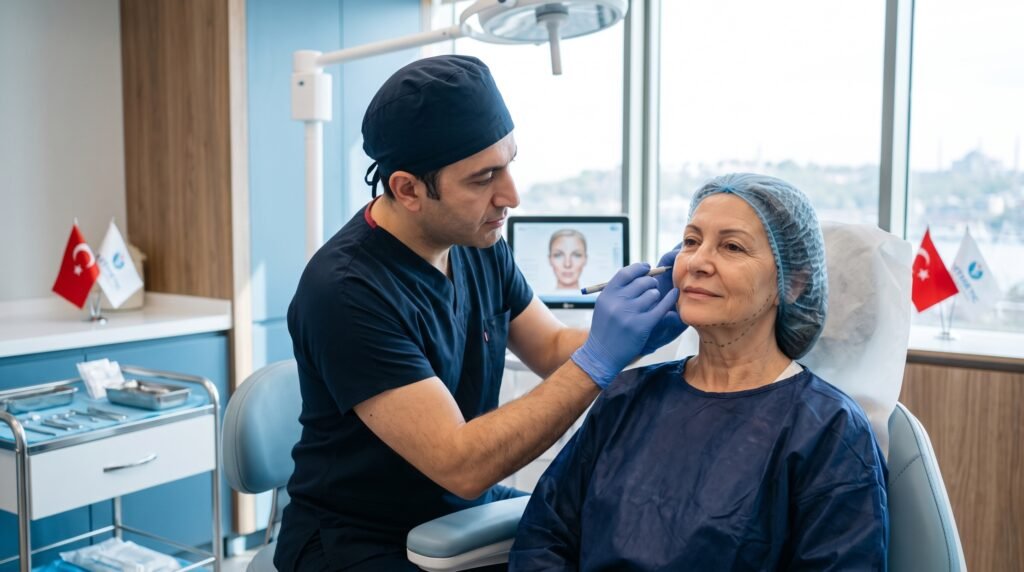
What a Face Lift Is
A face lift is an operation that lifts and firms the lower face and, in many cases, the neck. Rather than simply tightening the skin, modern techniques address the deeper layer of tissue and muscle beneath, repositioning it so the result looks natural rather than pulled. Excess skin is then removed and the remaining skin is redraped smoothly. The operation is carried out under anesthesia, and the extent of the lift is planned according to the individual face.
Orista is a health tourism facilitator that connects international patients with contracted hospitals and surgeons in Turkey. This page explains what a surgical face lift involves, how it differs from non-surgical options, and what recovery is like, so you can make an informed decision together with a qualified surgeon.
Why the Deeper Layer Matters
A point that distinguishes a well-performed face lift is that it does more than pull the skin. The signs of aging come largely from the descent of the deeper support structures of the face, not only from loose skin. By addressing this deeper layer and setting it in a higher position, the surgeon treats the cause of the sagging rather than only its surface. This is why a modern surgical lift can look balanced and natural, and why it offers a more lasting result than treatments that act on the skin alone.

How It Differs From Non-Surgical Lifting
It is worth placing a face lift alongside the non-surgical options. Treatments such as a thread lift or focused ultrasound suit mild to moderate loosening and give a lighter, temporary effect with little downtime. A surgical face lift addresses more advanced sagging, removes excess skin, and provides a more pronounced and longer-lasting change, at the cost of an operation and a longer recovery. Which is appropriate depends on the degree of aging and personal preference, and the surgeon will advise honestly on what suits you.
The Consultation and Planning
A thorough consultation is central to planning a face lift. The surgeon examines the face and neck, assesses the skin and the deeper structures, reviews your medical history, and discusses what you want to change. This is the stage to understand the extent of the operation, the recovery, the risks, and what result is realistic for your anatomy and skin. For international patients, the assessment often begins remotely with photographs and information, and is confirmed in person before surgery.
How the Operation Is Performed
A face lift is usually carried out under general anesthesia or sedation. The incisions are typically placed around the ear and into the hairline, where they are designed to be as discreet as possible. Through these, the surgeon lifts and repositions the deeper tissue, removes excess skin, and closes the incisions. In some cases the neck is addressed at the same time. The operation generally takes several hours depending on its extent, and the surgeon may combine it with other procedures where appropriate.
Who Is a Suitable Candidate?
A face lift is generally considered by adults in good general health with more advanced facial sagging, realistic expectations, and no medical conditions that would make surgery unsafe. Reasonable skin quality supports a good result. Surgeons usually advise stopping smoking before and after the operation, since it significantly affects healing in facial surgery. A full assessment is the only reliable way to confirm suitability.
Recovery and the Healing Timeline
Recovery from a face lift takes time and unfolds in stages, so planning the length of stay and follow-up carefully is important, especially for international patients.
- Swelling, bruising, tightness, and some numbness are common in the early period and settle gradually
- Dressings and, in some cases, drains are used at first and removed as the surgeon directs
- Many people feel presentable after a couple of weeks, with residual swelling continuing to fade
- The final, settled result develops over several months as healing completes
Risks and Considerations
As a major surgical procedure, a face lift carries risks that should be understood in advance. These include the general risks of surgery and anesthesia, bleeding, infection, and scarring, as well as considerations specific to facial surgery, such as changes in sensation, effects on the nerves that move the face, asymmetry, or a result that does not fully match expectations. The scars are placed discreetly but are permanent. An honest and thorough discussion of the risks and realistic outcomes is an essential part of the consultation, and no responsible surgeon guarantees a specific result.
Face Lift Surgery in Turkey
Turkey is a frequent destination for facial plastic surgery, supported by contracted hospitals in Istanbul and other cities with modern operating facilities and experienced surgeons. For international patients, combining surgery with organized travel, accommodation, and aftercare support makes the overall experience easier to manage, allowing attention to stay on recovery.
How Orista Supports You
As a facilitator, Orista coordinates the steps around your surgery. Your information and photographs can be reviewed by the medical team before you travel, you are matched with a suitable surgeon and hospital, and a dedicated representative stays in contact throughout. Transfers, accommodation, translation, and aftercare support can be arranged so your attention stays on recovery.
GOOD TO KNOW
Frequently Asked Questions
How is a surgical face lift different from a thread lift?+
A thread lift suits mild to moderate loosening and gives a lighter, temporary effect with little downtime. A surgical face lift addresses more advanced sagging, removes excess skin, and gives a more pronounced and longer-lasting result, with a longer recovery.
Will a face lift look pulled or unnatural?+
Modern techniques address the deeper layer of tissue rather than only tightening the skin, which helps the result look natural. This is discussed during your consultation.
Where are the scars?+
Incisions are usually placed around the ear and into the hairline to be as discreet as possible. The scars are permanent but designed to be well concealed.
How long is the recovery?+
Early swelling and bruising settle over the first weeks, and many people feel presentable after a couple of weeks. The final result develops over several months as healing completes.
How long should I plan to stay?+
Because early recovery and follow-up are important, the stay is planned around the operation. Your surgeon and representative will arrange this with you.
This content is for general informational purposes only and does not constitute medical advice, diagnosis, or treatment. Suitability, methods, and outcomes differ from person to person, and all surgery carries risks. Please consult a qualified surgeon or specialist for an assessment and personalized guidance before making any decision about a face lift procedure.