
GENERAL SURGERY
Pain and Swelling in and Around the Belly Button
A bulge or swelling around the belly button, sometimes with discomfort, is a common reason people seek a surgeon. In most cases it points to an umbilical or paraumbilical hernia, where tissue pushes through a weak spot in the abdominal wall near the navel. While often harmless at first, such a swelling should be assessed, because a hernia does not resolve on its own and can occasionally lead to complications. Understanding what causes it helps patients know when to seek care.
What Causes Swelling Around the Belly Button
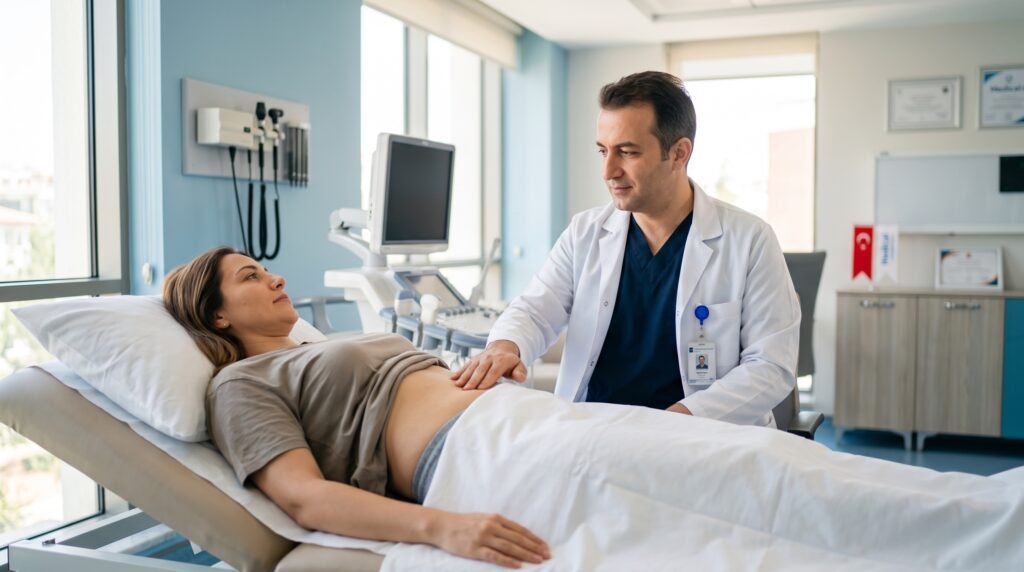
The most common cause of a swelling at or near the navel is a hernia in this area. The abdominal wall is made up of layers of muscle and tissue, and the region around the belly button can have a natural point of weakness. When the wall is weak here, tissue from inside the abdomen can push through, creating a bulge that is often most noticeable when standing, coughing, or straining. This is known as an umbilical hernia when it is right at the navel, or a paraumbilical hernia when it is just beside it.
Orista is a health tourism facilitator that connects international patients with contracted hospitals and surgeons in Turkey. This page explains what causes swelling around the belly button, how it is assessed, and how it may be treated, so you can plan the right approach together with a qualified surgeon.
Why This Area Is Prone to Hernias
It helps to understand why the belly button is a common site. During development, this area was where the umbilical cord passed through the abdominal wall, so it can remain a slightly weaker point. Over time, factors that increase pressure inside the abdomen, such as being overweight, repeated straining, or pregnancy, can encourage a weakness here to give way. This is why hernias in this region are among the more common types, and why a bulge at the navel so often turns out to be a hernia.
Recognizing the Symptoms
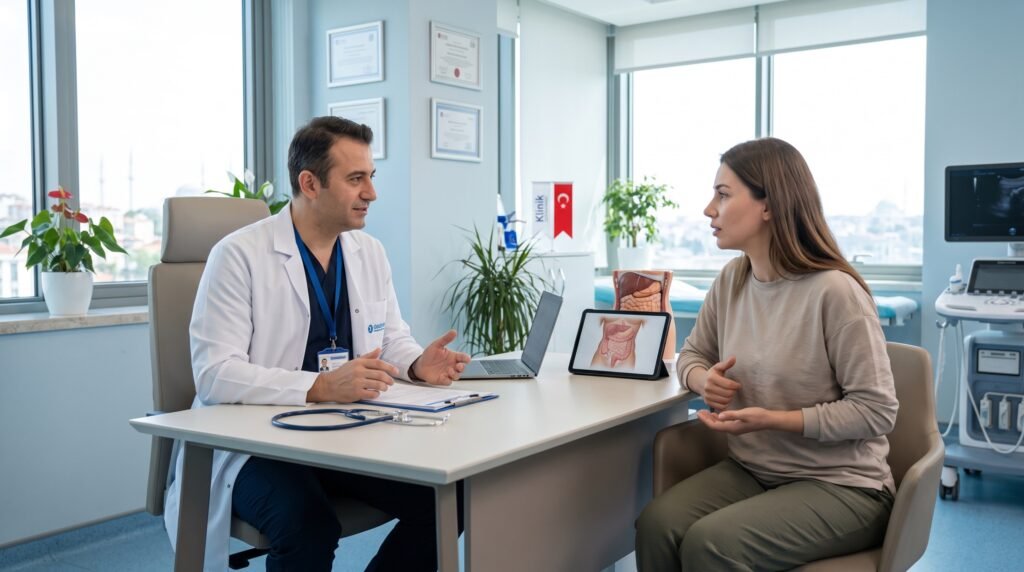
A hernia around the belly button has a fairly typical presentation, though it varies between people.
- A soft bulge or swelling at or near the navel
- A swelling that is more obvious when standing, coughing, or straining
- Discomfort or aching in the area, especially with activity
- A bulge that may reduce when lying down in the early stages
Warning signs that need prompt attention include a swelling that becomes firm, painful, and cannot be pushed back, which can indicate a trapped hernia and is a reason to seek care urgently.
Why a Hernia Should Be Assessed
A key point to understand is that a hernia does not heal by itself. The gap in the abdominal wall remains, and a hernia tends to persist or gradually enlarge over time. While many hernias cause only mild symptoms, there is a risk that a piece of tissue can become trapped in the gap, which can cut off its blood supply, a situation called strangulation that needs emergency treatment. For this reason, a swelling in this area is worth having assessed, so a surgeon can advise on whether and when repair is appropriate.
How It Is Assessed
Diagnosing a hernia is often straightforward. The surgeon examines the area, frequently asking you to stand or cough so the bulge can be felt, which is usually enough to confirm a hernia. In some cases, an ultrasound or other imaging is used to clarify the diagnosis or assess the size. The surgeon also considers your symptoms and general health to advise on the best course. For international patients, an initial assessment can often begin remotely through a description and photographs, with examination during the visit.
How It Is Treated
The treatment for a hernia is surgical repair, since the gap in the abdominal wall will not close on its own. The surgeon closes the weakness, often reinforcing it with a mesh to strengthen the repair and reduce the chance of it returning. The operation can frequently be carried out through a small incision, and in suitable cases a minimally invasive approach may be used. Small hernias with no symptoms are sometimes monitored rather than repaired straight away, and the surgeon advises on the right timing based on the size, symptoms, and your situation.
Who Is a Suitable Candidate for Surgery?
Hernia repair is generally considered for patients whose hernia causes symptoms, is enlarging, or carries a risk worth addressing, and who are in a fit enough state of health for surgery. The surgeon assesses the hernia and your overall health to advise on whether and when to operate. A full assessment confirms whether repair is appropriate for you and which approach suits your case.
Recovery After Hernia Repair
Recovery depends on the size of the hernia and the approach used. Many people return to light activity within a short period, avoiding heavy lifting and straining for several weeks to protect the repair. Some discomfort and swelling are common early on and settle with time. Because international patients travel home afterward, planning the length of stay and follow-up is important, and the surgeon gives tailored aftercare guidance, including advice on activity.
Risks and Considerations
As a surgical procedure, hernia repair carries risks that should be understood in advance. These include the general risks of surgery and anesthesia, bleeding, infection, and considerations specific to the repair, such as the small chance of the hernia returning. An honest discussion of the risks and realistic outcomes is part of the consultation, and the surgeon explains what applies to your case.
Hernia Treatment in Turkey
Turkey is a frequent destination for surgical care, supported by contracted hospitals in Istanbul and other cities with modern operating facilities and experienced surgeons. For international patients, combining treatment with organized travel, accommodation, and aftercare support makes the overall experience easier to manage, allowing attention to stay on recovery.
How Orista Supports You
As a facilitator, Orista coordinates the steps around your care. Your medical information can be reviewed by the medical team before you travel, you are matched with a suitable surgeon and hospital, and a dedicated representative stays in contact throughout. Transfers, accommodation, translation, and aftercare support can be arranged so your attention stays on recovery.
GOOD TO KNOW
Frequently Asked Questions
Will a hernia around my belly button heal on its own?+
No. The gap in the abdominal wall does not close by itself, and a hernia tends to persist or gradually enlarge. This is why having it assessed is worthwhile, so a surgeon can advise on whether and when repair is appropriate.
Why is the belly button a common site for hernias?+
This area was where the umbilical cord passed through the abdominal wall during development, so it can remain a slightly weaker point. Factors that increase pressure in the abdomen can encourage a weakness to give way here.
What warning signs need urgent attention?+
A swelling that becomes firm, painful, and cannot be pushed back can indicate a trapped hernia, which needs urgent care. Seek medical help promptly if this happens.
How is the hernia repaired?+
The surgeon closes the weakness, often reinforcing it with a mesh to strengthen the repair. It can frequently be done through a small incision, and in suitable cases a minimally invasive approach may be used.
How long is the recovery?+
Many people return to light activity within a short period, avoiding heavy lifting and straining for several weeks to protect the repair. The surgeon plans the stay and follow-up with you.
This content is for general informational purposes only and does not constitute medical advice, diagnosis, or treatment. Suitability, methods, and outcomes differ from person to person, and all surgery carries risks. A firm, painful swelling that cannot be pushed back needs urgent medical attention. Please consult a qualified surgeon or specialist for an assessment and personalized guidance regarding a swelling around the belly button.