
EYE DISEASES
Strabismus
Strabismus, often called a squint or crossed eyes, is a condition in which the eyes do not point in the same direction. One eye may turn in, out, up, or down while the other looks straight ahead. Beyond its effect on appearance, strabismus can affect vision and the way the two eyes work together, and in children it can influence how sight develops. It can be treated at any age, and understanding the condition helps families and adults know what options exist and why assessment matters.
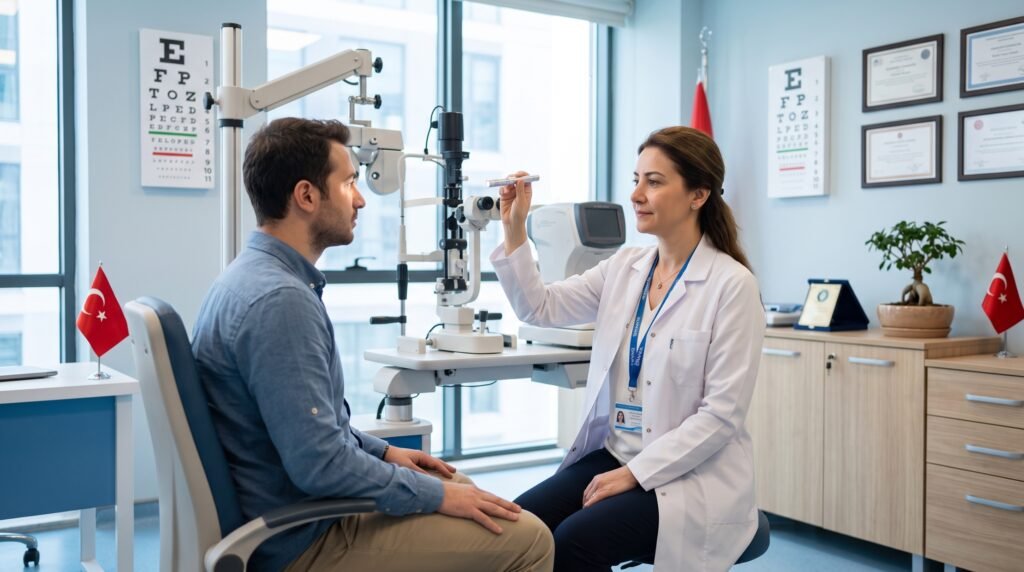
What Strabismus Is
Strabismus is a misalignment of the eyes, where they do not look in the same direction at the same time. It happens because the muscles that control eye movement, and the way the brain coordinates them, are not working together properly. The misalignment can be constant or come and go, and it can affect one eye or alternate between them. Because the two eyes normally work as a pair to produce a single, three-dimensional image, strabismus can disturb this teamwork, which is why it is more than a matter of appearance.
Orista is a health tourism facilitator that connects international patients with contracted hospitals and physicians in Turkey. This page explains what strabismus is, how it is assessed, and how it may be treated, so you can plan the right approach together with a qualified eye specialist.
How It Affects Vision
The effects of strabismus differ between children and adults, which is an important distinction. In a child, whose visual system is still developing, the brain may start to ignore the image from the misaligned eye to avoid double vision, which can lead to that eye's vision not developing fully, a condition called lazy eye. This is why early assessment of strabismus in children matters. In adults, who develop strabismus or have it return, the more common effect is double vision, since the brain does not suppress the image in the same way. The specialist assesses how it affects the individual.
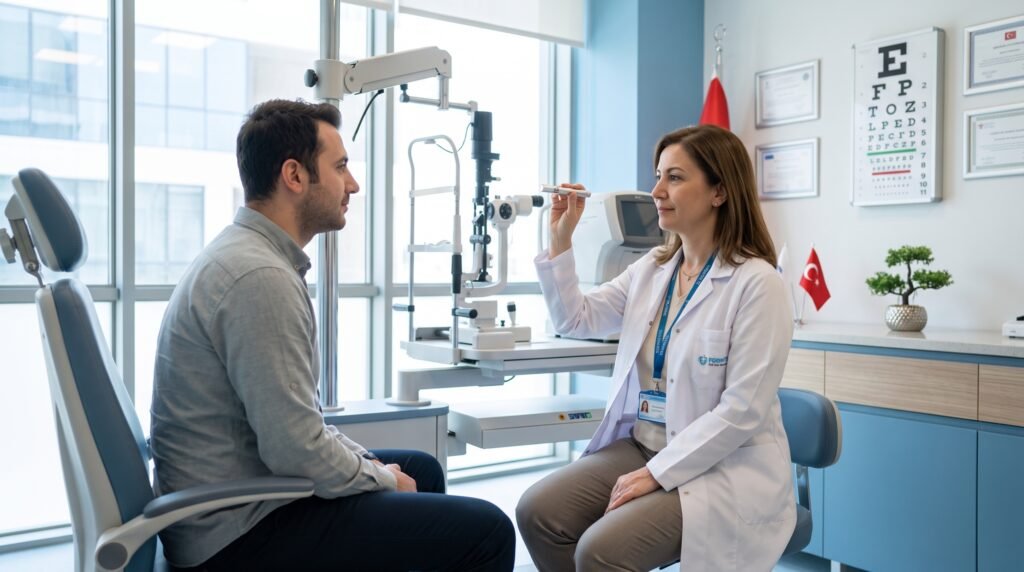
Strabismus in Children and Adults
A distinctive feature of strabismus is that it affects both children and adults, with different considerations for each.
- In children, it can appear early and may affect the development of vision, making timely assessment important
- In adults, it may be long-standing, or develop or return later, sometimes causing double vision
- It can be treated at any age, improving both alignment and, where relevant, how the eyes work together
- Correcting it in adults can also address the appearance as well as any double vision
The right approach depends on the age, the cause, and how the condition affects the person, which the specialist assesses.
What Causes Strabismus
Strabismus can have various causes, which the assessment aims to understand. In some cases it relates to the balance of the eye muscles, in others to how the brain coordinates them, and sometimes to a refractive error, such as significant long-sightedness, that strains the eyes. It can be present from early life or develop later, and occasionally it is linked to another condition. Identifying the cause matters, because it influences the treatment, and the specialist investigates this as part of the assessment.
How Strabismus Is Assessed
Assessing strabismus involves examining how the eyes align and move, as well as the vision and the health of the eyes. The specialist measures the misalignment, checks how the eyes work together, and examines for any underlying cause such as a refractive error. In children, age-appropriate methods are used. This careful assessment determines the type and degree of strabismus and its effect, which guides the treatment. Understanding the whole picture, rather than the misalignment alone, is central to planning the right approach.
How Strabismus Is Treated
Treatment depends on the type and cause of the strabismus and the age of the person. Several approaches exist, used alone or together. Glasses can help where a refractive error is involved. In children, treatment for a lazy eye, such as patching, may be part of the plan. Eye exercises may help in some cases. When these are not enough, or when the misalignment is significant, surgery on the eye muscles can realign the eyes. The specialist recommends the approach suited to the individual and explains what it involves and what is realistic.
Strabismus Surgery
When surgery is appropriate, it involves adjusting the muscles that control eye movement to improve the alignment of the eyes. It is a well-established procedure carried out by an eye surgeon, and it can be done in both children and adults. The aim is to bring the eyes into better alignment, which can improve how they work together and, in adults, address double vision and appearance. The specialist explains what the surgery involves, the recovery, and what to expect, since the details depend on the individual case.
The Consultation and Planning
Care begins with a thorough assessment of the eye alignment, movement, and vision. The specialist measures the strabismus, investigates the cause, discusses the effect on the person, and explains the treatment options, whether glasses, exercises, lazy eye treatment, surgery, or a combination. For international patients, an initial discussion can often begin remotely through medical information, with detailed examination and planning during the visit. For children, timely assessment is emphasized because of the effect on developing vision.
Strabismus Care in Turkey
Turkey is a frequent destination for eye care, supported by contracted hospitals in Istanbul and other cities with modern facilities and experienced specialists, including in strabismus. For international patients and families, combining care with organized travel, accommodation, and support services makes the experience easier to manage, allowing attention to stay on the care and recovery.
How Orista Supports You
As a facilitator, Orista coordinates the steps around your care. Your medical information can be reviewed by the medical team before you travel, you are matched with a suitable eye specialist and hospital, and a dedicated representative stays in contact throughout. Transfers, accommodation, translation, and aftercare support can be arranged so your attention stays on your eyes or your child's.
GOOD TO KNOW
Frequently Asked Questions
What is strabismus?+
It is a misalignment of the eyes, where they do not point in the same direction, caused by how the eye muscles and the brain's coordination work. It can affect vision and how the eyes work together, not just appearance.
Does strabismus only affect children?+
No. It affects both children and adults. In children it can affect developing vision, making timely assessment important, while in adults it may be long-standing or develop later, sometimes causing double vision. It can be treated at any age.
Why is early assessment important in children?+
Because a child's visual system is still developing, the brain may ignore the misaligned eye's image, which can lead to that eye's vision not developing fully, a lazy eye. Early assessment helps address this.
How is strabismus treated?+
Treatment depends on the type, cause, and age, and may include glasses, lazy eye treatment such as patching in children, eye exercises, or surgery on the eye muscles, used alone or together. The specialist recommends the suitable approach.
What does strabismus surgery involve?+
It adjusts the muscles that control eye movement to improve alignment. It is well established and can be done in children and adults, aiming to bring the eyes into better alignment and, in adults, address double vision and appearance.
This content is for general informational purposes only and does not constitute medical advice, diagnosis, or treatment. Suitability, methods, and outcomes differ from person to person. Strabismus in a child should be assessed promptly because of its effect on developing vision. Please consult a qualified eye specialist for an examination and personalized guidance regarding strabismus.