
MEDICAL AESTHETIC
Nasolabial Filler
The lines that run from the sides of the nose down to the corners of the mouth are among the first that many people notice as the face matures. Often called the nasolabial folds, or informally the smile lines, they can give the face a heavier, more tired look as they deepen. Nasolabial filler is used to soften these folds, either by filling them directly or by restoring support higher in the face, so the overall expression looks fresher and more relaxed.
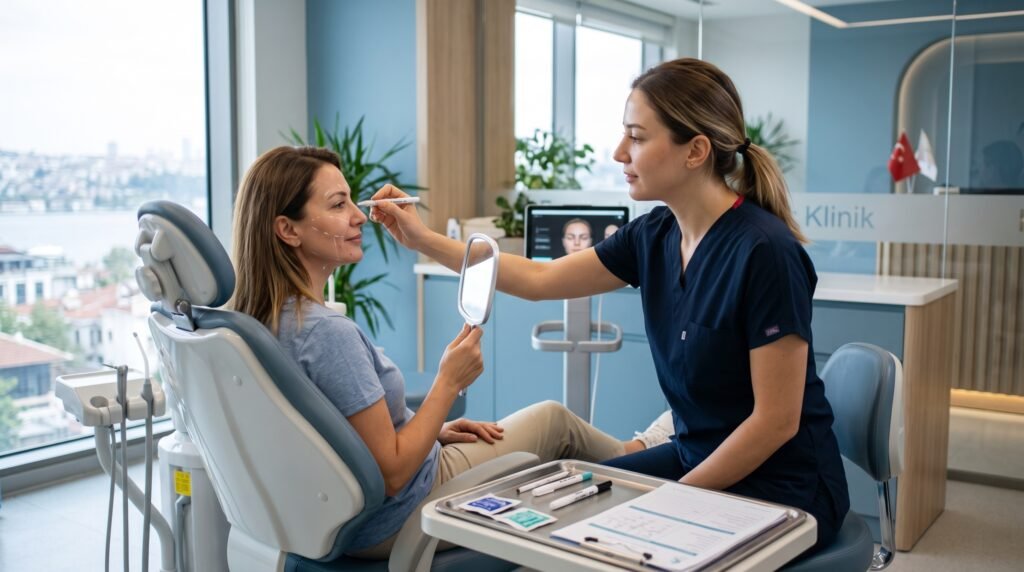
What the Nasolabial Folds Are
The nasolabial folds are the natural creases that separate the cheeks from the area around the mouth. Everyone has them to some degree, and they become more prominent when smiling. With time they can deepen and remain visible even at rest. The reason is not only the fold itself. As the face ages, the volume and support in the cheeks tend to descend, and this downward shift makes the fold below appear deeper. Understanding this helps explain why treatment is sometimes directed at the cheek rather than only at the line.
Orista is a health tourism facilitator that connects patients traveling from abroad with contracted hospitals and physicians in Turkey. This page describes how nasolabial folds form, how filler addresses them, and what the treatment involves, so you can discuss it with a qualified specialist.
What Nasolabial Filler Is
Nasolabial filler is the placement of an injectable gel, usually based on hyaluronic acid, to soften the fold and smooth the transition between the cheek and the mouth area. The product adds volume and support where it has been lost, lifting the crease so it is less pronounced. The thickness of the filler and the depth at which it is placed are chosen by the physician according to how deep the fold is and the structure of the face.
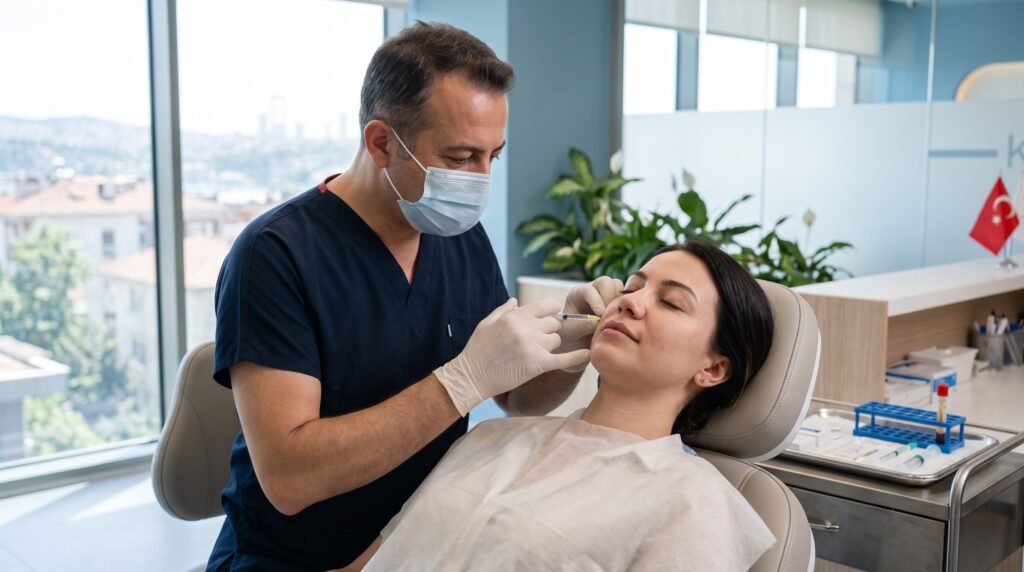
Two Ways to Approach the Fold
A thoughtful treatment often considers more than the line itself, and a physician may suggest one approach or a combination of the two.
The first approach is direct, placing filler within or alongside the fold to soften it. This addresses the crease where it is seen and can give an immediate smoothing effect.
The second approach is indirect, restoring volume to the cheek so the mid-face is supported from above. By lifting the tissue that has descended, this can reduce the depth of the fold at its source. In many cases the physician balances both, treating the cause while also refining the line, to keep the result natural.
How the Treatment Is Performed
The session takes place in a clinic. After the skin is cleansed, a numbing cream or a filler containing a local anesthetic is commonly used for comfort. The physician then injects the gel at the planned depth using a fine needle or a cannula, shaping the area gently to ensure a smooth, even result. The treatment is short, often around twenty to forty minutes, and does not involve incisions.
Who Is a Suitable Candidate?
Nasolabial filler is generally considered by adults in good general health who are bothered by deepening folds and have realistic expectations about a softening rather than a complete erasure. It may not be advised during pregnancy or breastfeeding, or for people with certain skin infections or specific health conditions. A physician will assess the depth of the folds, the state of the mid-face, and your goals to recommend the right plan.
Results and How Long They Last
A visible softening is usually apparent soon after the session, with the final look settling over the following days as any swelling resolves. The duration depends on the product used, the amount placed, and individual factors, and hyaluronic acid results in this area often last a number of months to longer before the material is gradually absorbed. Many people choose to refresh the treatment at intervals recommended by their physician. A realistic range is best given during consultation.
Recovery and Aftercare
Downtime is typically short. Mild redness, slight swelling, tenderness, or small bruises can appear at the injection points and generally settle within a few days. Simple care supports comfortable healing.
- Avoid pressing or heavily massaging the treated area unless advised
- Keep away from intense heat, saunas, and strenuous exercise for a short period
- Protect the skin from strong sun while it settles
- Follow the specific guidance your physician provides
Points to Consider
As with any injectable treatment, there are considerations to review in advance. Temporary swelling, bruising, redness, or tenderness are the most common and usually resolve on their own. Overfilling a fold directly can look unnatural, which is part of why a balanced approach and conservative technique matter. If an adjustment is needed, hyaluronic acid fillers can usually be dissolved with a specific enzyme. Discussing your expectations and medical history beforehand helps the physician plan a safe and natural result.
Nasolabial Filler in Turkey
Turkey is a frequent destination for aesthetic care, with contracted hospitals in Istanbul and other cities offering modern facilities and physicians experienced in facial injectable work. For international patients, combining the treatment with organized travel and local support makes the visit easier to manage and lets attention stay on the result.
How Orista Supports You
As a facilitator, Orista coordinates the steps around your treatment. The medical team reviews your information, matches you with a suitable physician and hospital, and a dedicated representative stays in contact throughout. Transfers, accommodation, and translation can be arranged so the practical side is handled for you.
GOOD TO KNOW
Frequently Asked Questions
Why might the physician treat my cheeks instead of the fold?+
Nasolabial folds often deepen because the cheek volume above has descended. Restoring support to the cheek can reduce the fold at its source, sometimes giving a more natural result than filling the line alone.
Will the folds disappear completely?+
The aim is to soften the folds for a fresher look rather than erase them entirely. Everyone has these creases to some degree, and a natural softening is usually the goal.
Is the treatment painful?+
Discomfort is usually mild. A numbing cream or a filler containing local anesthetic is often used, and most patients tolerate the injections well.
How long do the results last?+
Results in this area often last a number of months to longer, depending on the product and individual factors. Your physician can give a realistic range.
Can the filler be reversed?+
Hyaluronic acid fillers can usually be dissolved with a specific enzyme if an adjustment is needed. Your physician will explain whether this applies to the product used.
This content is for general informational purposes only and does not constitute medical advice, diagnosis, or treatment. Suitability, methods, and outcomes differ from person to person. Please consult a qualified physician or specialist for an assessment and personalized guidance before making any decision about a nasolabial filler procedure.