
HAIR TRANSPLANT
DHI and DHI Plus
Direct hair implantation takes the follicle from the donor area to its new home in a single, controlled motion. Instead of opening the recipient sites first and placing follicles afterward, DHI uses a specialized implanter pen that creates the opening and places the follicle at the same time. This gives the physician close control over the angle, depth, and direction of each hair, which is why the method is often favored for detailed work such as shaping the hairline.
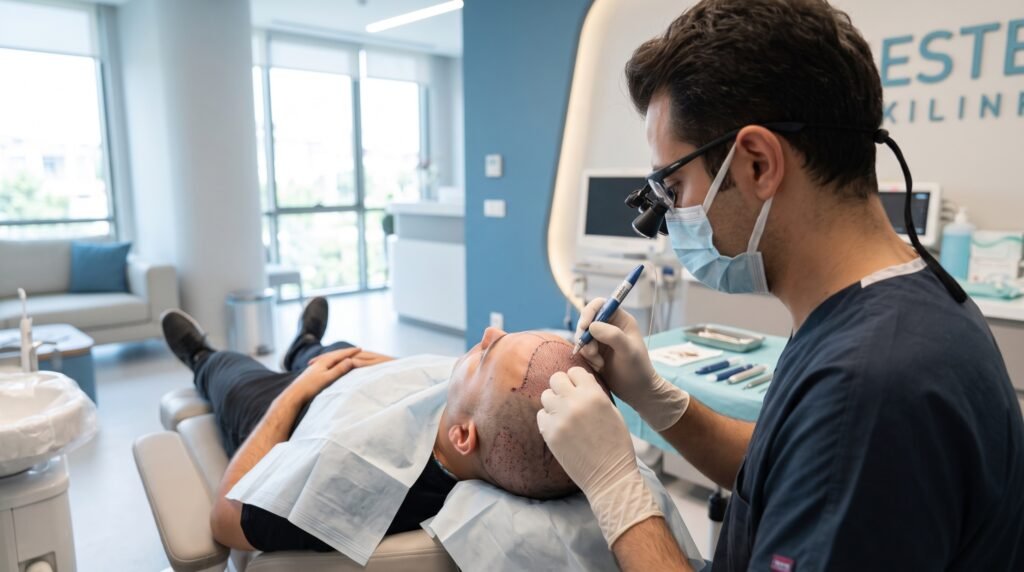
What DHI Is
DHI is a hair transplant technique built around an implanter pen, sometimes known as a Choi pen. After follicular units are harvested from the donor area, each follicle is loaded into the fine tip of the pen. The physician then places the follicle directly into the scalp, with the tip creating the opening and releasing the follicle in one step. Because this combines two actions that are usually separate, it allows precise placement of each hair.
Orista is a health tourism facilitator that connects international patients with contracted hospitals and physicians in Turkey. This page explains how DHI works, how DHI Plus refines it, and how it compares with other techniques, so you can decide with a qualified specialist.
The Implanter Pen and Why It Matters
The implanter pen is the heart of this method. By creating the recipient opening and delivering the follicle together, it reduces the time the follicle spends outside the scalp and lets the physician control exactly how each hair sits. This control over angle and direction is particularly valuable along the hairline and in areas where a natural flow of hair is important. The pen also makes it possible to place follicles close together when the plan calls for density, within the limits of what is safe for the tissue.
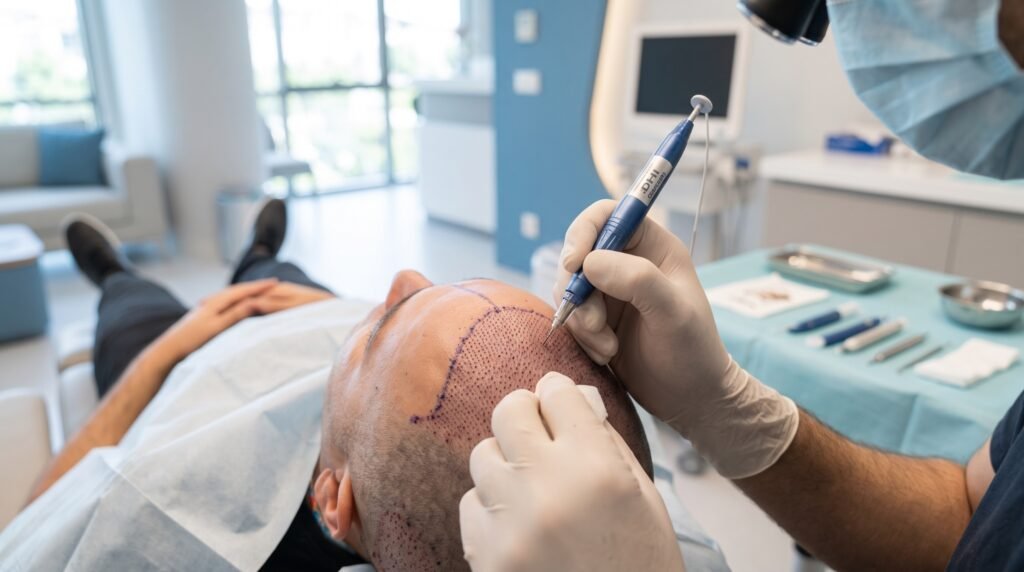
How DHI Compares With FUE
DHI and FUE share the same harvesting principle, taking follicles one by one from the donor area. The difference lies in how the follicles are placed. In FUE, the recipient sites are created first and the follicles are implanted afterward in a separate step. In DHI, the implanter pen combines these into one motion. Neither is simply better than the other, since the right choice depends on the case, the area being treated, and the physician's assessment. DHI is often chosen for detailed hairline work and for controlled density, while the physician will advise which approach fits your situation.
What DHI Plus Adds
DHI Plus refers to refinements layered onto the direct implantation method, with the aim of improving precision and protecting the follicles. Depending on the clinic and physician, this can involve enhanced pen techniques, careful graft handling, and detailed planning of angle and density. In some cases the approach can reduce the amount of shaving needed, which appeals to patients who prefer a more discreet recovery. The specifics vary, and the physician explains what their method involves during the assessment.
Advantages Often Cited
Patients and physicians commonly point to several features of the DHI approach, always within the limits of individual suitability.
- Close control over the angle, depth, and direction of each hair
- Suitability for detailed hairline design and natural flow
- The ability to place follicles densely when appropriate
- In some cases, less shaving of the recipient area
How a Session Unfolds
The procedure is carried out over a day under local anesthesia, with the patient awake and comfortable. After the hairline is designed and the donor area prepared, anesthesia is applied. Follicular units are harvested one by one, loaded into the implanter pens, and placed directly into the scalp at the planned angle and density. Aftercare guidance is given for the healing and growth period that follows. Because DHI is detailed work, sessions can take time, and the physician will explain what to expect for your case.
Who Is a Suitable Candidate?
DHI is generally considered by adults with hair loss who have a sufficient and stable donor area, good general health, and realistic expectations. Suitability depends on the pattern and cause of loss, donor quality, and the goals of the treatment. A physician assesses whether DHI or DHI Plus is the right technique for you or whether another method would serve better, which is confirmed during the consultation.
Results and the Growth Timeline
As with other transplant methods, the transplanted hairs commonly shed in the first weeks before new growth begins. The fuller result develops gradually over several months to around a year or more. Because growth is slow, patience is part of the process, and the physician will give a realistic timeline for your case.
Recovery After DHI
Careful aftercare in the early days protects the newly placed follicles. Some redness, swelling, scabbing, or tenderness is common at first and settles over time. Following the instructions closely supports healing and growth.
- Protect the recipient and donor areas from pressure and rubbing early on
- Follow the washing routine exactly as the physician describes
- Avoid strenuous exercise, saunas, and strong sun for the advised period
- Attend any follow-up and report concerns to the treating team
Points to Consider
As with any procedure, there are considerations to review. Temporary redness, swelling, scabbing, or tenderness are common and settle with time. The number of grafts depends on the donor area, and the result depends on careful technique and planning. Because DHI is precise work that relies heavily on skill, choosing an experienced physician is important. An open discussion of your goals, donor capacity, and medical history helps plan a safe and realistic treatment.
DHI Hair Transplant in Turkey
Turkey is one of the best-known destinations for hair transplantation, with contracted hospitals in Istanbul and other cities offering experienced teams and modern facilities. For international patients, combining the procedure with organized travel and local support makes the journey easier to manage from consultation to recovery.
How Orista Supports You
As a facilitator, Orista coordinates the steps around your treatment. Your information and photographs can be reviewed by the medical team before you travel, you are matched with a suitable physician and hospital, and a dedicated representative stays in contact throughout. Transfers, accommodation, and translation can be arranged so your attention stays on the result.
GOOD TO KNOW
Frequently Asked Questions
What is the main difference between DHI and FUE?+
Both harvest follicles one by one. In FUE the recipient sites are opened first and follicles placed afterward, while DHI uses an implanter pen to open and place in one motion, giving close control over each hair.
Does DHI require shaving my head?+
In some cases the approach can reduce the amount of shaving needed, which can suit patients who prefer a discreet recovery. Your physician will explain what applies to your plan.
Is DHI better than FUE?+
Neither is simply better. The right choice depends on the case and the area treated. A physician will recommend the method that fits your situation.
Is the procedure painful?+
Local anesthesia is used so the procedure is comfortable. Some tenderness afterward is normal and settles over the early recovery period.
When will I see the final result?+
The transplanted hairs shed at first, then new growth develops over several months to around a year or more, varying between individuals.
This content is for general informational purposes only and does not constitute medical advice, diagnosis, or treatment. Suitability, methods, and outcomes differ from person to person. Please consult a qualified physician or specialist for an assessment and personalized guidance before making any decision about a DHI hair transplant procedure.