
GENERAL SURGERY
Digestive System
The digestive system is the body's remarkable processing line, turning food into the energy and nutrients we need and removing what is left over. It runs from the mouth to the end of the bowel and includes organs such as the stomach, intestines, liver, gallbladder, and pancreas. When part of this system is affected by disease, the effects can reach beyond digestion to overall health and wellbeing. General surgery plays an important role in treating many conditions of the digestive organs when an operation is the right course.

How the Digestive System Works
The digestive system is a connected pathway through which food travels and is broken down. It begins in the mouth and continues through the esophagus to the stomach, where food is processed, then into the small intestine, where most nutrients are absorbed, and on to the large intestine, which handles water and waste. Along the way, organs such as the liver, gallbladder, and pancreas add substances that aid digestion. Because these parts work together, a problem in one area can affect how the whole system functions, which is why digestive health is considered as a connected whole.
Orista is a health tourism facilitator that connects international patients with contracted hospitals and surgeons in Turkey. This page gives an overview of the digestive system and the conditions that may need surgical care, so you can plan the right approach together with a qualified surgeon.
The Organs Involved
Several organs make up the digestive system, each with its own role and its own conditions that may need attention.
- The stomach, which processes food and can be affected by various conditions
- The small and large intestines, where absorption and waste handling occur
- The liver, which has many roles in processing and detoxifying
- The gallbladder, which stores bile for digesting fats
- The pancreas, which produces digestive enzymes and hormones
Many of these organs have their own dedicated pages, since the conditions affecting them differ, and the surgeon addresses the specific organ and problem.
When Digestive Conditions Need Surgery
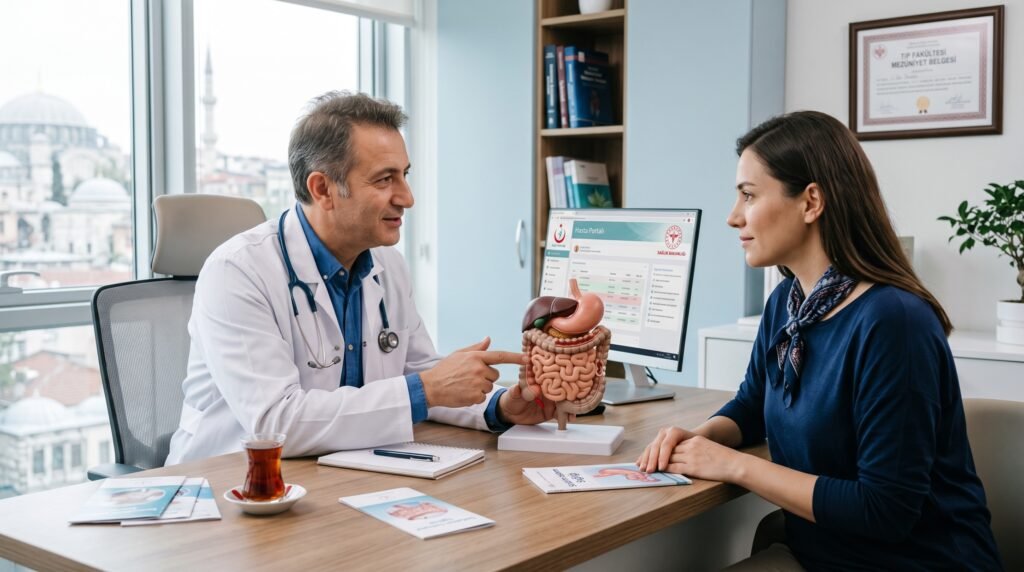
Not all digestive conditions need an operation. Many are managed with medication, diet, or other non-surgical care, and surgery is reserved for situations where it is the right solution. General surgery becomes relevant for conditions such as gallstones, certain stomach and intestinal problems, hernias affecting the digestive organs, appendicitis, and growths that need removal, among others. The decision to operate is made carefully, weighing the condition, the symptoms, and the alternatives, and the surgeon advises honestly on whether surgery is appropriate.
Signs of a Digestive Problem
Digestive conditions can show themselves in many ways, and the pattern of symptoms helps point to the problem. Common signs include abdominal pain, changes in appetite or weight, nausea, vomiting, difficulty swallowing, changes in bowel habit, or bleeding. Because these symptoms can have many causes, from minor to serious, assessment is important to understand what lies behind them. Persistent or worrying symptoms, in particular, deserve a proper look so that the cause can be identified and treated.
How Conditions Are Assessed
Reaching a diagnosis combines a careful history with examination and appropriate tests. The specialist discusses the symptoms, examines the abdomen, and may use investigations such as blood tests, imaging like ultrasound or CT, or endoscopy to look inside the digestive tract. The choice of test depends on the suspected problem. Interpreting these findings together builds an accurate picture of the condition, which is the basis for deciding on treatment. For international patients, this often begins remotely through medical information and is confirmed during the visit.
How Digestive Conditions Are Treated
Treatment is always tailored to the specific condition. Where surgery is appropriate, many digestive operations can now be carried out using minimally invasive, laparoscopic techniques, which can mean a quicker recovery than traditional open surgery. Other conditions are managed medically or with a combination of approaches, sometimes involving specialists in digestive medicine alongside the surgeon. The plan depends on the diagnosis, and the surgeon explains what is recommended and why for the particular condition.
Digestive Care in Turkey
Turkey is a frequent destination for surgical and medical care, supported by contracted hospitals in Istanbul and other cities with modern facilities and experienced specialists. For international patients, combining care with organized travel, accommodation, and aftercare support makes the overall experience easier to manage, allowing attention to stay on recovery.
How Orista Supports You
As a facilitator, Orista coordinates the steps around your care. Your medical information and any results can be reviewed by the medical team before you travel, you are matched with a suitable specialist and hospital, and a dedicated representative stays in contact throughout. Transfers, accommodation, translation, and aftercare support can be arranged so your attention stays on your health.
GOOD TO KNOW
Frequently Asked Questions
What organs make up the digestive system?+
It runs from the mouth to the bowel and includes the esophagus, stomach, small and large intestines, and the liver, gallbladder, and pancreas, which aid digestion. Because they work together, a problem in one area can affect the whole system.
Do digestive problems always need surgery?+
No. Many are managed with medication, diet, or other non-surgical care. Surgery is reserved for conditions where it is the right solution, such as gallstones, certain stomach and intestinal problems, or growths. The surgeon advises honestly.
What symptoms suggest a digestive problem?+
Common signs include abdominal pain, changes in appetite or weight, nausea, vomiting, difficulty swallowing, changes in bowel habit, or bleeding. Persistent or worrying symptoms deserve assessment to find the cause.
How are digestive conditions diagnosed?+
Through a history, examination, and tests such as blood tests, imaging, or endoscopy, chosen for the suspected problem and interpreted together to build an accurate picture of the condition.
Can digestive surgery be minimally invasive?+
Often, yes. Many digestive operations can now be done with minimally invasive, laparoscopic techniques, which can mean a quicker recovery. The surgeon advises whether this suits your condition.
This content is for general informational purposes only and does not constitute medical advice, diagnosis, or treatment. Suitability, methods, and outcomes differ from person to person. Persistent or worrying digestive symptoms should be assessed by a doctor. Please consult a qualified surgeon or specialist for an assessment and personalized guidance regarding a digestive condition.