
PEDIATRICS
Pediatric Allergy
Allergies often appear early in life, and in children they can affect everything from daily comfort to safety around food. A runny nose that will not settle, a skin rash that keeps returning, or a worrying reaction after a meal can all point to an allergy. Pediatric allergy is the field devoted to understanding and managing these conditions in children, helping families identify what a child reacts to and how to keep it under control as the child grows.

What Pediatric Allergy Is
Pediatric allergy is the branch of medicine concerned with allergic conditions in children. An allergy occurs when the immune system reacts to something that is usually harmless, such as a food, pollen, or an animal, treating it as a threat. In children these reactions can range from mild and bothersome to more serious, and they can change as a child grows. A pediatric allergy specialist helps identify the triggers, assess the severity, and put a plan in place to manage the condition safely.
Orista is a health tourism facilitator that connects international families with contracted hospitals and physicians in Turkey. This page explains what pediatric allergy care involves and how it is arranged, so you can plan the right approach for your child together with a qualified specialist.
Common Allergic Conditions in Children
Allergy in children can show itself in several ways, sometimes affecting more than one part of the body.
- Food allergies, such as reactions to certain foods
- Respiratory allergies, including hay fever and allergic rhinitis from pollen or dust
- Skin conditions such as eczema and hives linked to allergy
- Allergic conditions affecting the airways and breathing
A specialist assesses which conditions are present and how they relate to one another, since they can be connected in a child.
How Allergies Are Assessed
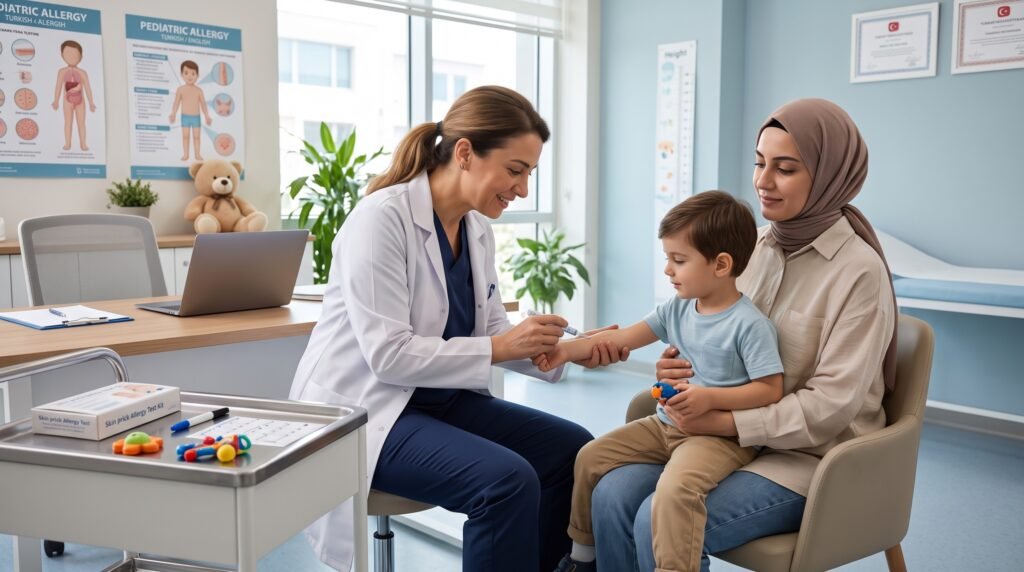
Identifying what a child is allergic to is a careful process that combines several sources of information. The specialist takes a detailed history of the child's symptoms and when they occur, which often gives important clues. Depending on the situation, testing may be used to help confirm the triggers, such as skin tests or blood tests, chosen according to the child's age and the suspected allergy. Interpreting these results in the context of the child's history is central, since a test result alone does not tell the whole story. The specialist explains each step to the family.
Managing a Child's Allergy
Once the triggers are understood, the focus turns to a management plan tailored to the child. This usually combines avoiding known triggers where practical, treating symptoms when they occur, and preparing for reactions. For some conditions, longer-term approaches may be discussed with the specialist. An important part of the plan is helping the family understand how to recognize and respond to a reaction, especially where a food allergy carries the risk of a more serious response. The plan is adjusted over time as the child grows and the allergy changes.
Supporting the Family
Managing a child's allergy is very much a shared effort with the family, who deal with it every day at home, at school, and when traveling. A good allergy specialist spends time helping parents understand the condition, the plan, and what to watch for, so the family feels confident in keeping the child safe. This educational side is a defining feature of pediatric allergy care and is especially valuable for families who have been worried about unexplained reactions.
The Consultation and Planning
Care begins with a thorough consultation. The specialist reviews the child's history and any previous records, discusses the symptoms in detail, carries out or arranges appropriate testing, and explains the findings and the management plan to the family. For international families, this often begins remotely through the child's medical information and symptom history, so the right specialist can be identified and a plan proposed before or confirmed during the visit.
Pediatric Allergy Care in Turkey
Turkey is a destination for a wide range of medical care, supported by contracted hospitals in Istanbul and other cities with modern facilities and physicians experienced in children's allergies. For families traveling with a child, combining care with organized travel, family accommodation, and support services makes the overall experience easier to manage, allowing attention to stay on the child's wellbeing.
How Orista Supports Your Family
As a facilitator, Orista coordinates the steps around your child's care. Your child's medical information and symptom history can be reviewed by the medical team before you travel, you are matched with a suitable pediatric allergy specialist and hospital, and a dedicated representative stays in contact throughout. Transfers, family accommodation, translation, and ongoing support can be arranged so your attention stays on your child.
GOOD TO KNOW
Frequently Asked Questions
How do you find out what my child is allergic to?+
The specialist combines a detailed history of the symptoms with testing where appropriate, such as skin or blood tests, chosen for the child's age and the suspected allergy. The results are interpreted in the context of the history, since a test alone does not tell the whole story.
Can children grow out of allergies?+
Some allergies can change as a child grows, while others persist. The specialist monitors the condition over time and adjusts the plan accordingly. What applies to your child is assessed individually.
What does managing an allergy involve?+
It usually combines avoiding known triggers where practical, treating symptoms, and preparing for reactions, along with helping the family recognize and respond to one. The plan is tailored to the child and adjusted over time.
How do we start as an international family?+
The assessment often begins remotely through your child's medical information and symptom history, so the right specialist can be identified and a plan proposed before or confirmed during your visit.
Is translation available?+
Yes. Translation assistance can be arranged so families can communicate clearly with the specialist about their child's allergy and management plan.
This content is for general informational purposes only and does not constitute medical advice, diagnosis, or treatment. Every child's situation is different, and suitability and outcomes vary. If a child has a severe allergic reaction, seek emergency medical help immediately. Please consult a qualified pediatric allergy specialist for an assessment and personalized guidance regarding your child's condition.