
MEDICAL AESTHETIC
Botox (Botulinum Toxin)
Every time we frown, smile, or raise our eyebrows, the muscles beneath the skin contract. Over the years, this repeated movement leaves marks that remain even when the face is at rest, producing the lines many people notice first on the forehead and around the eyes. Botox addresses exactly this kind of line by calming the muscle activity that creates it, which is why it has become one of the most familiar names in aesthetic medicine.

The Idea Behind the Treatment
Botox is the common name for botulinum toxin, a purified protein used in small, carefully measured doses. When injected into a specific muscle, it temporarily interrupts the signal that tells that muscle to contract. The muscle relaxes, and the skin above it smooths out. Because the effect is limited to the treated area and wears off naturally over time, the treatment is considered a temporary and adjustable approach rather than a permanent change.
It is worth separating two uses that often get grouped together. Botox works on lines caused by movement, known as dynamic lines. Fillers, by contrast, restore lost volume and address static folds. A physician may recommend one, the other, or a combination, depending on what the examination shows.
Orista is a health tourism facilitator that brings international patients together with contracted hospitals and physicians in Turkey. The purpose of this page is to explain how botulinum toxin treatment works, where it is used, and what the experience involves, so the decision can be made together with a qualified specialist.
Where Botox Is Commonly Applied
The treatment is most often used in the upper third of the face, where expression lines tend to appear earliest, although it has other recognized uses as well.
- Horizontal forehead lines that appear when raising the eyebrows
- Frown lines between the eyebrows, sometimes called the elevens
- Lines at the outer corners of the eyes, known as crow's feet
- Selected uses such as a gummy smile or a downturned mouth, when appropriate
Beyond aesthetics, botulinum toxin is also used in medical settings for conditions such as excessive sweating and certain muscle-related complaints. Those uses fall under a physician's medical evaluation.
A Note on Preventive Use
Some younger patients choose smaller doses before deep lines have formed, with the aim of softening muscle habits early. Whether this approach suits a particular person depends on their skin, age, and expression patterns, and it should be discussed openly during the consultation rather than assumed in advance.
What Happens During a Session
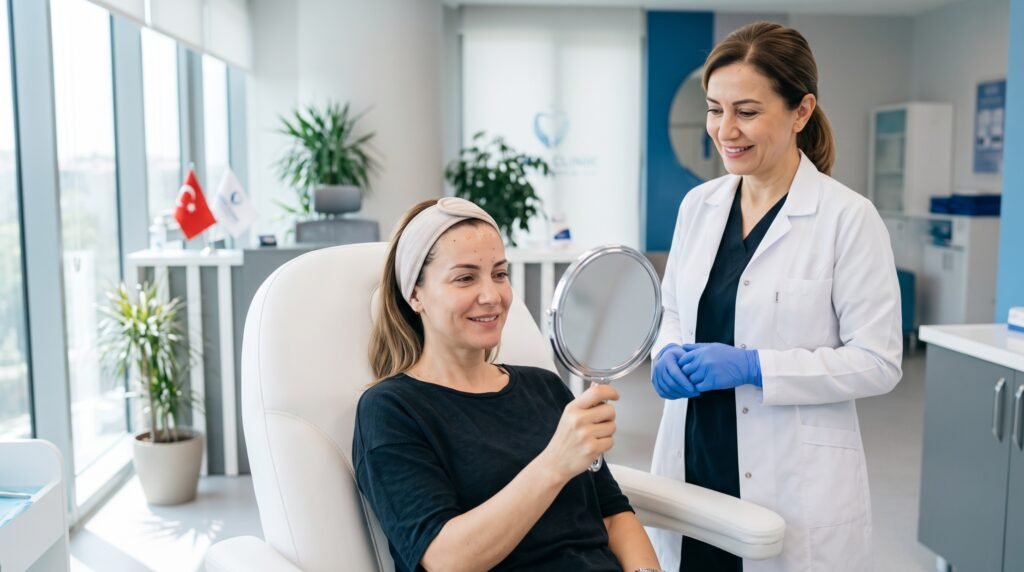
A session is short and carried out in a clinic setting. The physician first studies how the face moves, since the placement of each injection depends on the individual muscle pattern rather than a fixed template. After cleansing the skin, very fine needles are used to deliver the product to the planned points. The whole process usually takes around ten to twenty minutes. No incisions are involved, and most people leave and continue with their day soon afterward.
When the Effect Appears and How Long It Lasts
Unlike fillers, botulinum toxin does not act immediately. The relaxing effect begins to show within a few days and reaches its full appearance after roughly one to two weeks. From there, the result typically holds for a number of months before muscle activity gradually returns and the lines begin to reappear. Many patients plan repeat sessions at intervals suggested by their physician to maintain the effect. Exact timing varies between individuals, so a realistic range is best given during the assessment.
Is It the Right Option for You?
Botulinum toxin is generally considered by adults in good health who want to soften expression lines and understand that the result is temporary. It is usually not advised during pregnancy or breastfeeding, or for people with certain neuromuscular conditions or known sensitivities. Only a qualified physician can confirm whether the treatment is appropriate after reviewing your health history.
- Adults bothered by forehead, frown, or eye-area movement lines
- People who prefer a quick application with minimal downtime
- Those comfortable with maintaining results through periodic sessions
After Your Treatment
Recovery is straightforward. Small red spots or minor swelling at the injection points usually fade within hours to a day, and bruising is uncommon but possible. A few simple precautions help the product settle where it was placed.
- Stay upright and avoid lying down for several hours after the session
- Avoid rubbing or pressing the treated area for the rest of the day
- Skip intense exercise, saunas, and heavy heat for a short period
- Follow the specific guidance your physician gives you
Safety and What to Discuss Beforehand
When performed by a trained physician with correct dosing, botulinum toxin has a long record of use in aesthetic medicine. Side effects are usually mild and temporary, such as slight swelling, redness, or a short-lived headache. Less commonly, a temporary unevenness or a drooping sensation can occur if the product affects a nearby muscle, which generally resolves on its own. Discussing your medical history, medications, and expectations in advance helps the physician plan a safe and suitable treatment.
Botulinum Toxin Treatment in Turkey
Turkey draws many patients seeking aesthetic care, supported by contracted hospitals in Istanbul and other cities with modern facilities and physicians experienced in injectable treatments. For those traveling from abroad, arranging the treatment alongside organized travel and on-the-ground support makes the visit easier to coordinate from start to finish.
How Orista Supports You
Orista coordinates the practical side of your treatment as a facilitator. After the medical team reviews your information, you are matched with a suitable physician and hospital, and a dedicated representative stays in contact throughout. Transfers, accommodation, and translation can be arranged so that your focus remains on the treatment itself.
GOOD TO KNOW
Frequently Asked Questions
Will my face look frozen or unnatural?+
A natural result depends on correct dosing and placement. When planned carefully by a qualified physician, the aim is to soften lines while keeping normal expression. This is something to discuss during your consultation.
Does the injection hurt?+
The needles used are very fine, and most patients report only a brief pinching sensation. A numbing option can be used for those who are sensitive.
How quickly will I see a change?+
The effect is not immediate. It usually begins within a few days and settles fully after about one to two weeks.
What happens when it wears off?+
As the effect fades, muscle movement gradually returns and the lines reappear as they were before. The treatment can be repeated at intervals your physician recommends.
Can I travel or fly soon after the session?+
Many patients resume normal activity quickly, but it is best to follow the aftercare advice you are given, especially avoiding pressure on the area and intense heat for a short period.
This content is for general informational purposes only and does not constitute medical advice, diagnosis, or treatment. Suitability, methods, and outcomes differ from person to person. Please consult a qualified physician or specialist for an assessment and personalized guidance before making any decision about a botulinum toxin procedure.