
PLASTIC SURGERY
Body Contouring
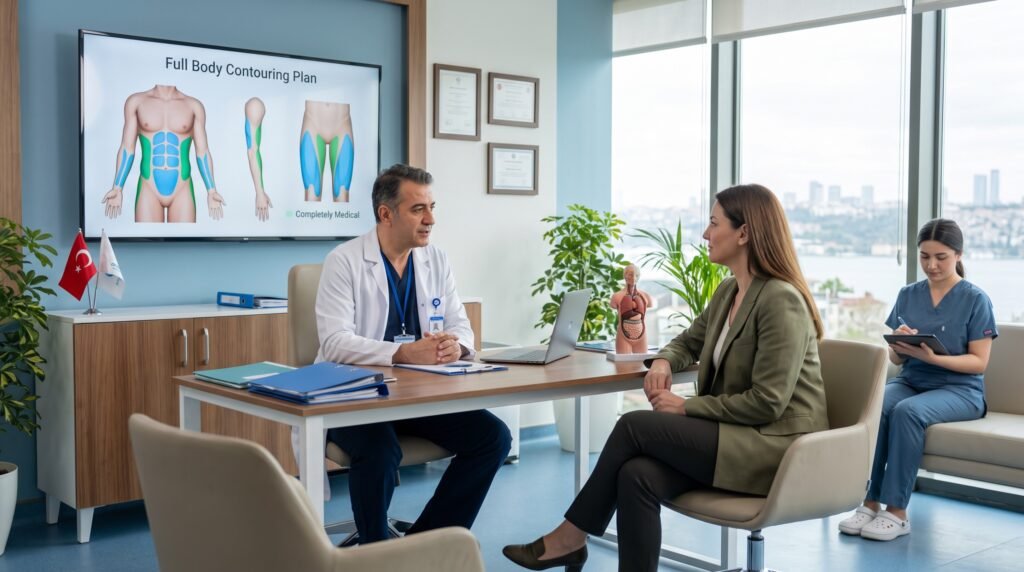
Reaching a major weight-loss goal is a significant achievement, but it often leaves behind a challenge that diet and exercise cannot solve: loose, excess skin across several areas of the body. Body contouring is the umbrella term for the surgical procedures that address this, removing excess skin and reshaping the body after substantial weight change. Rather than a single operation, it is usually a tailored plan that may combine several procedures to restore a firmer, more proportionate shape.
What Body Contouring Is
Body contouring refers to a group of surgical procedures that remove excess skin and reshape the body, most often after major weight loss or significant changes such as pregnancy. When a large amount of weight is lost, the skin frequently does not retract to fit the smaller body, leaving loose folds that can cause discomfort, irritation, and difficulty with clothing and activity. Body contouring addresses these areas surgically to improve both comfort and shape. It is carried out under anesthesia, and the plan is built around the individual.
Orista is a health tourism facilitator that connects international patients with contracted hospitals and surgeons in Turkey. This page explains what body contouring involves, how a plan is built, and what recovery requires, so you can make an informed decision together with a qualified surgeon.
A Tailored Combination, Not One Operation
What distinguishes body contouring from a single procedure is that it is usually a personalized plan. Loose skin after weight loss rarely affects just one area, so a surgeon may address several regions, either together or in stages. The exact combination depends on where the excess skin is, your priorities, and what can be safely done in one session. This is why body contouring is better thought of as a journey planned around you than as a single fixed operation.

Procedures That May Be Part of a Plan
Depending on the areas of concern, a body contouring plan may draw on several procedures.
- Tummy tuck to address loose abdominal skin and muscle separation
- Arm lift, or brachioplasty, for loose skin on the upper arms
- Thigh lift for sagging skin on the thighs
- Lower body or buttock lift for the lower trunk and buttocks
- Breast or chest procedures where loose skin affects these areas
The Importance of a Stable Weight
A key principle in body contouring is timing. Surgeons usually advise that a person reaches a stable weight and maintains it for a period before undergoing these procedures, since further weight change afterward can affect the result. For those who have had weight-loss surgery, this often means waiting until the weight has settled. General health and good nutrition also matter, because major contouring surgery asks a lot of the body during healing. The surgeon advises on the right timing.
The Consultation and Planning
A thorough consultation is central to body contouring. The surgeon examines the areas of loose skin, assesses your overall health and the pattern of excess, reviews your weight history and medical background, and discusses your priorities. Together you build a plan, deciding which areas to address and whether to do so in one session or in stages. This is the stage to understand the scars involved, the recovery, and what result is realistic. For international patients, the assessment often begins remotely with photographs and information and is confirmed in person before surgery.
How the Procedures Are Performed
Body contouring operations are carried out under general anesthesia. Each procedure involves removing the excess skin from its area, tightening and reshaping the remaining tissue, and closing the incisions, which are placed as discreetly as the area allows. When several procedures are combined, the operation is longer and planned carefully for safety. Drains may be used to help with fluid. The length of surgery depends on how many areas are addressed and the extent of each.
Scars Are Part of the Trade-Off
Because body contouring removes excess skin, it involves scars, and understanding this in advance is important. The scars vary by procedure and can be significant, though surgeons place them where clothing can usually cover them and refine them as much as possible. They fade over time but are permanent. For many people who have lost a great deal of weight, the improvement in comfort and shape is worth the scars, but this is a personal decision made with full information during the consultation.
Who Is a Suitable Candidate?
Body contouring is generally considered by adults in good general health who have loose, excess skin after major weight loss or other significant change, who have maintained a stable weight, and who have realistic expectations. Good nutrition and not smoking around the time of surgery support healing, which is especially important for these procedures. A full assessment is the only reliable way to confirm suitability and to plan the right combination and timing.
Recovery and the Healing Timeline
Recovery from body contouring takes time, particularly when several areas are treated, so planning the length of stay and follow-up carefully is essential for international patients.
- Compression garments are usually worn to support the treated areas as they heal
- Movement is limited at first, and activity is increased gradually as advised
- Swelling, bruising, and discomfort are common early on and settle over weeks
- The final shape and the softening of scars develop over several months
Risks and Considerations
As major surgery, body contouring carries risks that should be understood in advance, and these can be greater when procedures are combined. They include the general risks of surgery and anesthesia, bleeding, infection, fluid collection, wound healing problems, changes in sensation, and significant scarring. Healing can vary in people who have lost a large amount of weight. An honest and thorough discussion of the risks and realistic outcomes is an essential part of the consultation, and no responsible surgeon guarantees a specific result.
Body Contouring in Turkey
Turkey is a frequent destination for body contouring surgery, supported by contracted hospitals in Istanbul and other cities with modern operating facilities and experienced surgeons. For international patients, combining surgery with organized travel, accommodation, and aftercare support makes the overall experience easier to manage, which is especially helpful given the longer recovery these procedures can involve.
How Orista Supports You
As a facilitator, Orista coordinates the steps around your surgery. Your information and photographs can be reviewed by the medical team before you travel, you are matched with a suitable surgeon and hospital, and a dedicated representative stays in contact throughout. Transfers, accommodation, translation, and aftercare support can be arranged so your attention stays on recovery.
GOOD TO KNOW
Frequently Asked Questions
Is body contouring a single operation?+
Not usually. It is a tailored plan that may combine several procedures, done together or in stages, depending on where the loose skin is and your priorities. The surgeon builds the plan with you.
When should I have body contouring after weight loss?+
Surgeons usually advise reaching a stable weight and maintaining it for a period first, since further weight change can affect the result. The surgeon advises on the right timing.
Will the scars be large?+
Scars vary by procedure and can be significant, placed where clothing can usually cover them. They fade over time but are permanent. For many people the improvement in comfort and shape is worth this trade-off.
Can several areas be treated at once?+
Sometimes, but combining procedures makes the operation longer and is planned carefully for safety. The surgeon decides what can be done safely in one session versus in stages.
How long is the recovery?+
Recovery takes time, especially with several areas treated. Movement is limited at first and the final result develops over months. Your surgeon will plan the stay and follow-up.
This content is for general informational purposes only and does not constitute medical advice, diagnosis, or treatment. Suitability, methods, and outcomes differ from person to person, and all surgery carries risks. Please consult a qualified surgeon or specialist for an assessment and personalized guidance before making any decision about body contouring procedures.