
After a pregnancy or a big change in weight, many people find that their stomach simply doesn’t go back to the way it was. The skin hangs a little lower, the waist feels softer, and the lower belly keeps a pouch that no amount of sit-ups seems to touch. It’s frustrating, especially when you’re otherwise fit and eating well. Often the reason is that exercise can’t fix what’s going on: stretched skin and separated muscles don’t respond to training the way fat does.
That’s where a tummy tuck, known medically as abdominoplasty, comes in. It’s one of the most requested body procedures in plastic surgery, and also one of the most misunderstood. Some people expect it to be a weight-loss operation. Others worry the scar will be impossible to hide. This guide goes through what the surgery actually involves, who it suits, how recovery tends to unfold and what kind of result is realistic.
What a tummy tuck actually does
A tummy tuck works on three things at once.
First, it removes excess skin from the lower abdomen. This is the loose, often stretch-marked skin that sits below the belly button and sometimes folds over the waistband. Stretch marks within the removed section go with it, which is a welcome side effect for many patients.
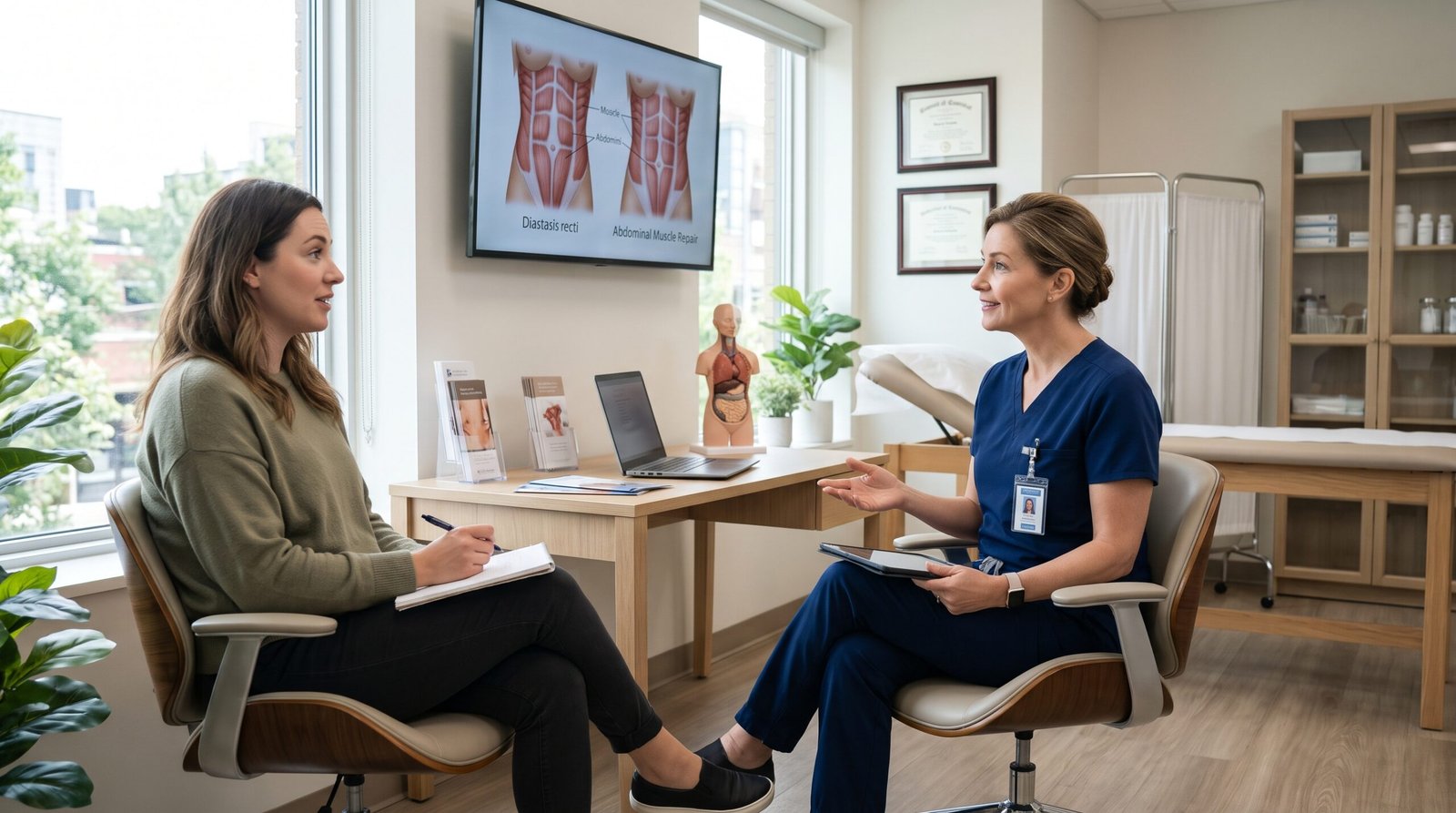
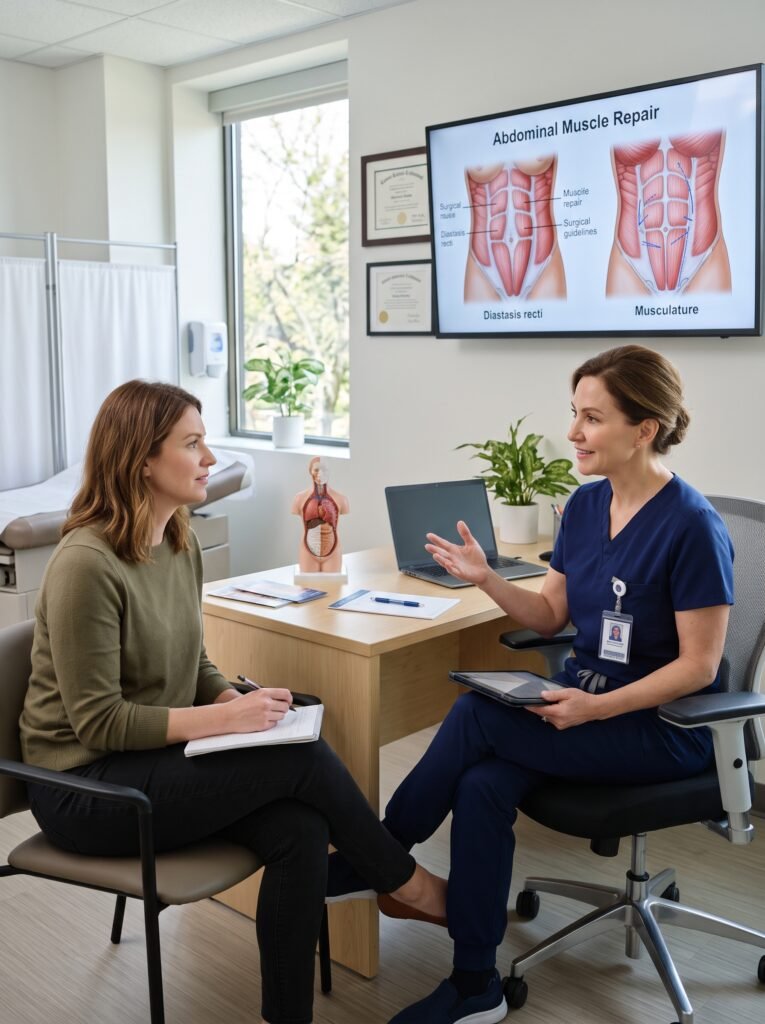
Second, it tightens the abdominal muscles. During pregnancy, the two vertical muscles at the front of the abdomen are pushed apart to make room for the baby. In many women they never fully come back together, a condition called diastasis recti. The gap lets the belly push forward and can contribute to back discomfort and a feeling of weakness in the core. The surgeon stitches these muscles back together, creating a firmer wall from the inside.
Third, it reshapes the area. The remaining skin is pulled down and smoothed, the belly button is repositioned so it sits naturally in its new surroundings, and the overall line from the ribs to the hips becomes flatter and more defined.
What it doesn’t do is make you lose weight. The amount of tissue removed is usually modest in terms of kilos. A tummy tuck is a contouring procedure: it changes shape, not size.

Who it suits, and who should wait
The best candidates are people who are close to a weight they can comfortably maintain and who are bothered by loose skin or a lower belly that won’t flatten. Common examples include:
- Mothers whose abdomen has stayed stretched or rounded after one or more pregnancies
- People who have lost a significant amount of weight, through diet or bariatric surgery, and are left with an apron of skin
- Those with a separation of the abdominal muscles that causes a bulge even when they’re slim
- Older patients whose skin has lost elasticity over time
Timing matters. If you’re still planning to have children, most surgeons will suggest waiting, because a later pregnancy can stretch the muscles and skin again and undo much of the result. The same goes for weight: if you’re in the middle of losing weight, it’s better to reach a stable point first and hold it for several months. Operating too early often means a less satisfying result and sometimes a second procedure later.
General health counts too. Smoking slows healing and raises the risk of complications around the wound, so smokers are asked to stop for several weeks before and after surgery. Conditions such as diabetes or high blood pressure aren’t necessarily a barrier, but they need to be well controlled. Your surgeon will go through your medical history in detail before recommending anything.
Not every tummy tuck is the same
The word covers several variations, and the right one depends on how much loose skin you have and where it sits.
Full abdominoplasty
This is the standard version. The incision runs low across the abdomen, roughly from hip to hip, placed so it can usually be hidden under underwear or a bikini. A second small incision around the belly button allows it to be brought out in its new position. The muscles are tightened along their full length, from the ribs down to the pubic bone. It suits people with loose skin both above and below the navel.
Mini tummy tuck
When the problem is limited to the area below the belly button, a mini tummy tuck may be enough. The incision is shorter, the belly button usually stays where it is, and muscle tightening, if needed, covers only the lower section. Recovery tends to be quicker. The trade-off is that it can’t address skin or muscle laxity higher up, so it’s only right for a fairly specific group of patients.
Extended abdominoplasty
After major weight loss, loose skin often wraps around the sides toward the back. An extended tummy tuck carries the incision further around the hips to deal with the flanks as well. It’s a bigger operation with a longer scar, but for the right person it gives a much more even result than a standard version would.
Fleur-de-lis abdominoplasty
When there’s a large amount of excess skin both vertically and horizontally, as can happen after very significant weight loss, the surgeon may add a vertical incision running up the middle of the abdomen. This allows skin to be removed in both directions. The scar is more visible, so it’s generally reserved for cases where the amount of loose skin makes it worthwhile.

Combining with liposuction and other procedures
A tummy tuck is often paired with liposuction of the flanks, the waist or the upper abdomen. Removing fat in these areas helps define the waistline and creates a smoother transition between the treated area and the rest of the body. For mothers, it’s also common to combine the operation with breast surgery in a single session, a combination often called a mommy makeover. Combining procedures means one anaesthetic and one recovery period, but it also means a longer operation and a somewhat heavier recovery, so it’s something to discuss carefully with your surgeon rather than assume.
The consultation and getting ready
The first consultation is where the real planning happens. The surgeon will examine your abdomen standing and lying down, check how much loose skin there is, feel for any muscle separation and look for hernias, which are sometimes found and repaired at the same time. You’ll talk about what bothers you most and what you’re hoping to see afterward. Photos are usually taken for your medical record and for comparison later.
This is also the moment to be honest about your plans. If you’re thinking about another pregnancy or still losing weight, say so. A good surgeon would rather adjust the timing than operate at the wrong moment.
In the weeks before surgery you’ll typically be asked to:
- Stop smoking and avoid nicotine products altogether
- Pause certain medicines and supplements that can increase bleeding, as advised by your doctor
- Have blood tests and any other checks the anaesthetist needs
- Arrange help at home for the first week or two, especially if you have small children
- Prepare loose, comfortable clothes that are easy to get into without bending
On the day of surgery
A tummy tuck is done under general anaesthesia and usually takes somewhere between two and four hours, depending on the type and whether other procedures are combined with it. The surgeon makes the incisions, lifts the skin away from the muscle wall, stitches the separated muscles together, removes the excess skin and closes the wound in layers. Thin drains are often placed under the skin to stop fluid from collecting, and you’ll wake up wearing a compression garment.
Most patients stay in hospital for one or two nights. The first day is mainly about pain control and getting up for short walks, which helps circulation and lowers the risk of blood clots. You’ll notice that you can’t stand fully upright at first. That’s expected, because the tightened skin pulls, and you’ll gradually straighten over the following days.

Recovery, week by week
Every patient heals at their own pace, and your surgeon’s instructions always come first. Still, recovery after a full tummy tuck tends to follow a recognisable pattern.
The first week
This is the hardest stretch. The abdomen feels tight and sore, and moving from lying to sitting takes effort. Pain is managed with medication, and most people find it more uncomfortable than truly painful by the end of the week. You’ll walk slightly bent forward and sleep with your upper body raised and a pillow under your knees to take tension off the wound. If drains were placed, they’re usually removed within the first several days. Short walks around the house several times a day are important.
Weeks two and three
Posture gradually straightens and everyday movement becomes easier. Many people with desk jobs feel ready to go back to work toward the end of this period, though tiredness is common. Swelling is still obvious, especially later in the day. The compression garment stays on almost all the time.
Weeks four to six
The abdomen starts to feel more like your own again. Light exercise such as walking at a brisk pace is usually allowed, but lifting anything heavy, including small children, and any exercise that strains the stomach muscles still has to wait. Around the six-week mark, most surgeons review progress and begin clearing patients for more activity.
Three months and beyond
By now most of the swelling has gone and the shape is much clearer, though some residual firmness or numbness around the lower abdomen can take longer to settle. Feeling in the skin below the belly button often returns slowly over many months. The final result is usually judged at around six months to a year.
About the scar
There’s no tummy tuck without a scar, and it’s worth being clear-eyed about that. The good news is that surgeons place it as low as possible so it sits within the underwear or bikini line. In the early months it will look red or pink and may feel slightly raised. Over the following year it typically fades and flattens into a pale line.
You can help it along by keeping it out of direct sun, following any advice on silicone sheets or gels, and avoiding tension on the wound while it heals. How a scar matures also depends on your skin type and genetics, which is why two people with the same operation can end up with quite different-looking scars.
What kind of result to expect
A well-performed tummy tuck gives a flatter, firmer abdomen with a more defined waist. Many patients say the biggest change isn’t just how they look in clothes, but how they feel: jeans fit differently, there’s no more tucking loose skin into a waistband, and the core feels stronger thanks to the repaired muscles.
The results are long-lasting, because the removed skin doesn’t grow back and the muscle repair holds. What can change the picture is a significant weight gain or a later pregnancy. Keeping a stable weight, staying active and building core strength once you’re cleared for exercise all help protect the result for years.
Risks worth knowing about
Like any major operation, a tummy tuck carries risks, and a responsible surgeon will go through them with you. The most common include:
- Seroma, a collection of fluid under the skin, which may need to be drained in the clinic
- Delayed wound healing, particularly in smokers or where the wound is under tension
- Changes in skin sensation, usually temporary but sometimes lasting
- Scarring that is wider or more noticeable than expected
- Blood clots, which is why early walking and other preventive measures matter
- Asymmetry or small irregularities that may need a minor touch-up
Most of these are uncommon, and many can be reduced by choosing an experienced surgeon, following pre-operative advice closely and sticking to the aftercare plan.
Questions to ask your surgeon
Going into a consultation with a few questions ready helps you get the most out of it:
- Which type of tummy tuck would you recommend for me, and why?
- Do I have muscle separation, and will it be repaired?
- Would liposuction or any other procedure improve the result?
- Where will the scar sit, and how long will it be?
- How long will I be in hospital, and when can I go back to work?
- What follow-up will I have, and who do I contact if something worries me?
How Orista Healthcare helps
Orista Healthcare connects patients with experienced plastic surgeons at our contracted hospitals and helps with every step around the operation, from the first review of your photos and medical history to the consultation, the hospital stay and follow-up afterward. If you’re thinking about a tummy tuck and want an honest opinion on whether it’s right for you, our team can arrange a free consultation.