
DENTAL TREATMENTS
Dental Implants
A missing tooth affects more than appearance. It can change how a person chews, speaks, and feels about their smile, and over time it can affect the neighboring teeth and the jaw. Dental implants have become the preferred way to replace missing teeth because they restore a tooth from the root up, providing a stable, long-lasting, and natural-feeling result. Rather than resting on the gum or relying on adjacent teeth, an implant is anchored in the jaw, which is what sets it apart from other ways of replacing teeth.

What a Dental Implant Is
A dental implant is an artificial tooth root, usually a small screw-shaped post made of titanium, that is placed into the jawbone to replace the root of a missing tooth. Once it has integrated with the bone, it provides a stable foundation onto which a crown, the visible part of the tooth, is attached. An implant therefore replaces the whole tooth, root and crown, rather than just the visible part. This is what gives implants their stability and natural feel, and why they are considered a long-term solution for missing teeth.
Orista is a health tourism facilitator that connects international patients with contracted clinics and dentists in Turkey. This page explains what dental implants are, how the process works, and what to expect, so you can plan the right approach together with a qualified dentist.
How Implants Differ From Other Options
Understanding how implants compare with other ways of replacing teeth helps explain their appeal. A bridge replaces a missing tooth by attaching to the neighboring teeth, which usually means those teeth are reshaped to support it. A denture rests on the gums and can be removable. An implant, by contrast, stands on its own, anchored in the jaw, without relying on or altering the adjacent teeth, and without resting on the gum. Because it replaces the root, it also helps maintain the jawbone, which can recede where a tooth root is missing. The dentist advises which option suits a particular situation.
The Role of Osseointegration
A key concept behind dental implants is osseointegration, the process by which the implant fuses with the jawbone. After the titanium post is placed, the bone gradually grows around and bonds to it over a period of healing, firmly locking it in place. This biological bond is what makes an implant so stable and able to withstand the forces of chewing. Because osseointegration takes time, the implant process usually involves a healing period between placing the implant and attaching the final crown, which is an important part of how the treatment works.
The Stages of Treatment
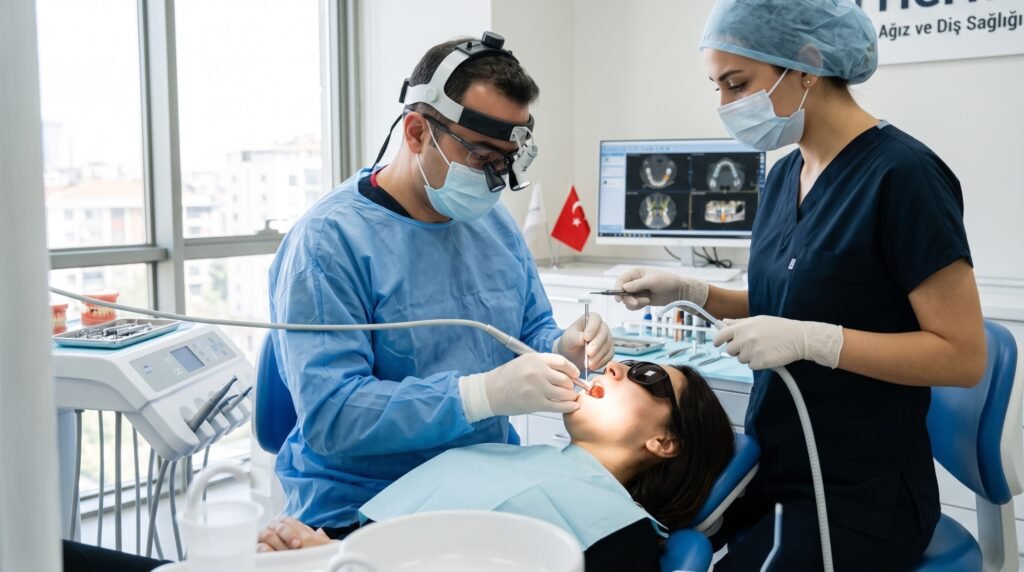
Implant treatment generally follows a sequence of stages, which the dentist plans according to the individual.
- A thorough assessment, including examination and imaging, to plan the treatment and check the jawbone.
- Placement of the implant into the jawbone, carried out under local anesthesia.
- A healing period during which the implant integrates with the bone.
- Attachment of the crown, custom-made to match the natural teeth, onto the integrated implant.
The exact process varies between people and situations, and some cases may differ from this general sequence, which the dentist explains.
The Healing Period and Planning for Travel
An important practical point, especially for patients traveling for treatment, is the healing period required for osseointegration. Because the implant needs time to integrate with the bone before the final crown is attached, implant treatment often cannot be completed in a single short visit. This may mean the treatment is arranged in stages, sometimes with two visits, or planned around the healing time. A clear plan agreed in advance sets out the timeframe, and the dentist advises on how the treatment and any visits can be arranged for an international patient.
Who Is a Suitable Candidate?
Dental implants are generally considered for adults in good general and oral health who have one or more missing teeth and enough jawbone to support an implant, or who can have the bone built up where needed. Healthy gums and a commitment to good oral care support a lasting result. Certain conditions or habits, such as smoking, can affect healing and suitability. A full assessment, including imaging of the jaw, is the only reliable way to confirm whether implants are appropriate, which the dentist carries out.
Caring for Implants
Once in place, dental implants are cared for much like natural teeth, and good care is important for their long-term success. Regular brushing, cleaning between the teeth, and routine dental check-ups help keep the implant and the surrounding gum healthy. Because the health of the gum and bone around the implant matters, looking after them is key to the implant lasting well. The dentist gives guidance on caring for implants, and with good care they can serve as a long-lasting replacement for missing teeth.
Risks and Considerations
As a dental procedure, implant treatment carries considerations that should be understood in advance. These include the general considerations of a minor surgical procedure, the need for the implant to integrate successfully, and the importance of healthy gums and bone. Factors such as smoking or certain conditions can affect the outcome, which the dentist discusses. An honest discussion of the process, the healing, and the care required is part of the consultation, and the dentist confirms suitability through assessment.
Dental Implants in Turkey
Turkey is a frequent destination for dental implant treatment, supported by contracted clinics in Istanbul and other cities with modern facilities and experienced dentists. For international patients, combining treatment with organized travel, accommodation, and support services makes the experience easier to manage, while the healing time implants require means planning the visit, or visits, carefully is important.
How Orista Supports You
As a facilitator, Orista coordinates the steps around your dental care. Your information and any dental records can be reviewed by the medical team before you travel, you are matched with a suitable clinic and dentist, and a dedicated representative stays in contact throughout. Transfers, accommodation, translation, and support can be arranged so your attention stays on your treatment.
GOOD TO KNOW
Frequently Asked Questions
What is a dental implant?+
It is an artificial tooth root, usually a titanium post, placed into the jawbone to replace the root of a missing tooth. Once it integrates with the bone, a crown is attached, so the implant replaces the whole tooth, root and crown.
How are implants different from a bridge or denture?+
An implant stands on its own, anchored in the jaw, without relying on or altering neighboring teeth or resting on the gum. A bridge attaches to adjacent teeth, and a denture rests on the gums. Implants also help maintain the jawbone.
Why is a healing period needed?+
The implant must fuse with the jawbone through a process called osseointegration, which takes time and gives the implant its stability. This is why treatment often involves a healing period between placing the implant and attaching the crown.
Can implant treatment be done in one visit?+
Often not, because of the healing time needed for the implant to integrate. Treatment may be arranged in stages or around the healing period, sometimes with two visits. The dentist plans the timeframe, especially for international patients.
How do I care for implants?+
Much like natural teeth, with regular brushing, cleaning between the teeth, and routine check-ups. Keeping the gum and bone around the implant healthy is key to it lasting well. The dentist gives specific guidance.
This content is for general informational purposes only and does not constitute medical or dental advice, diagnosis, or treatment. Suitability, methods, and outcomes differ from person to person. Please consult a qualified dentist for an examination and personalized guidance before making any decision about dental implants.