
OBESITY & BARIATRIC SURGERY
Gastric Balloon
Not everyone considering weight loss is ready for, or suited to, an operation. The gastric balloon offers a non-surgical option, a soft balloon placed temporarily in the stomach to help a person feel fuller and eat less. Because it involves no incisions and is removed after a set period, it appeals to people seeking a less invasive step, often as a way to kick-start weight loss alongside changes to diet and lifestyle. Understanding how it works helps set realistic expectations.
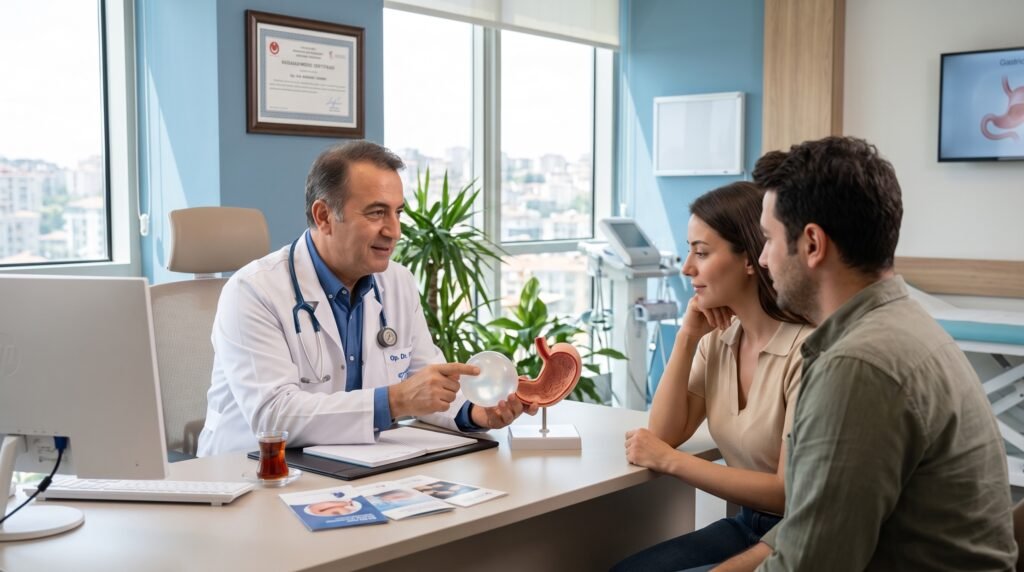
What the Gastric Balloon Is
The gastric balloon is a soft, expandable device that is placed inside the stomach and filled, usually with a saline solution or sometimes gas, so that it takes up space. By occupying part of the stomach, it helps a person feel full sooner and eat smaller amounts. It is a temporary measure, left in place for a set period, commonly several months, and then removed. Because it is placed and removed without surgery, it is considered one of the less invasive weight-loss options.
Orista is a health tourism facilitator that connects international patients with contracted hospitals and physicians in Turkey. This page explains what the gastric balloon involves, who it suits, and what to expect, so you can plan the right approach together with a qualified specialist.
A Non-Surgical, Temporary Approach
Two features define the gastric balloon and set it apart from surgical options. First, it is non-surgical: it is usually placed using an endoscope, a thin tube passed through the mouth into the stomach, without any incisions. Second, it is temporary: unlike operations that permanently change the stomach, the balloon is removed after its set period. These features make it a lighter-touch option, though they also mean its effect is designed to support a limited period of weight loss rather than to provide a permanent change by itself.

How It Is Placed and Removed
The procedure to place the balloon is usually straightforward and does not require major surgery. In the common approach, a deflated balloon is guided into the stomach using an endoscope, with the patient under sedation for comfort, and then filled once in position. The whole process is typically short, and the patient can usually go home the same day. At the end of its period, the balloon is removed in a similar way. Some types of balloon differ in how they are placed, which the specialist explains.
What to Expect After Placement
It is normal to experience some adjustment in the first days after the balloon is placed. The stomach needs to get used to the device, and symptoms such as nausea, a feeling of fullness, or discomfort are common early on, usually settling within a few days as the body adapts. The specialist provides guidance and support for this period. Once the adjustment passes, the balloon helps the person eat smaller portions, which, combined with dietary changes, supports weight loss during the months it is in place.
The Balloon Works With Lifestyle Change
A key point to understand is that the gastric balloon is a support, not a standalone cure. It helps a person eat less and feel fuller, but lasting results depend on using this period to build healthier eating habits and a more active lifestyle. Because the balloon is temporary, the aim is to make changes during the months it is in place that can be maintained after it is removed. For this reason, the balloon is usually part of a wider plan that includes dietary guidance and support, which the specialist arranges.
Who Is a Suitable Candidate?
The gastric balloon is generally considered for people who want help with weight loss but may not need or want surgery, or who are not candidates for an operation, and who are ready to commit to lifestyle changes. Suitability depends on weight, health, and individual factors, and the specialist assesses whether it is appropriate and realistic for a particular person. It is not suited to everyone, and the specialist advises honestly on whether it fits your situation and goals.
The Consultation and Planning
Care begins with an assessment. The specialist reviews your weight history and health, discusses your goals and readiness for change, and explains what the balloon involves, including the adjustment period and the lifestyle commitment. This is the stage to understand what is realistic. For international patients, the assessment often begins remotely through medical information and is confirmed before the procedure, with planning for the follow-up that supports the balloon's period.
Recovery and the Period With the Balloon
Recovery from the placement itself is usually quick, with most people returning to normal activity within a short time after the initial adjustment. The more important period is the months the balloon is in place, during which dietary guidance and support help build lasting habits. Follow-up during this time is part of the process. Because international patients travel home, planning how the follow-up and dietary support continue is important, and the specialist provides guidance for the whole period.
Risks and Considerations
While less invasive than surgery, the gastric balloon still carries considerations that should be understood in advance. Early nausea and discomfort are common, and less common issues can occur, which the specialist explains. The balloon is temporary, so weight regain is possible if lasting habits are not established during its period, which is why the lifestyle commitment matters so much. An honest discussion of the benefits, limitations, and the importance of change is part of the consultation.
Gastric Balloon in Turkey
Turkey is a frequent destination for weight-loss treatments, supported by contracted hospitals in Istanbul and other cities with modern facilities and experienced specialists. For international patients, combining the procedure with organized travel, accommodation, and support services makes the experience easier to manage, while the importance of follow-up during the balloon's period means planning for ongoing support matters too.
How Orista Supports You
As a facilitator, Orista coordinates the steps around your procedure. Your medical information can be reviewed by the medical team before you travel, you are matched with a suitable specialist and hospital, and a dedicated representative stays in contact throughout. Transfers, accommodation, translation, and support can be arranged so your attention stays on your health.
GOOD TO KNOW
Frequently Asked Questions
Is the gastric balloon surgery?+
No. It is a non-surgical option, usually placed using an endoscope through the mouth without incisions, and removed after a set period. This makes it one of the less invasive weight-loss options.
How long does the balloon stay in?+
It is temporary and left in place for a set period, commonly several months, then removed. The aim is to use that time to build lasting eating and lifestyle habits.
Will I feel unwell after it is placed?+
Some adjustment is normal in the first days, with nausea, fullness, or discomfort as the stomach adapts, usually settling within a few days. The specialist provides guidance and support for this period.
Will I keep the weight off after it is removed?+
The balloon is a support, not a standalone cure. Lasting results depend on building healthier habits during the months it is in place, since weight regain is possible without them. This is why lifestyle change matters so much.
Who is it suitable for?+
It is generally considered for people who want help with weight loss but may not need or want surgery, and who are ready to commit to lifestyle changes. The specialist assesses whether it suits your situation.
This content is for general informational purposes only and does not constitute medical advice, diagnosis, or treatment. Suitability, methods, and outcomes differ from person to person. The gastric balloon works alongside lasting lifestyle change. Please consult a qualified specialist for an assessment and personalized guidance before making any decision about a gastric balloon.