
MEDICAL BRANCHES
Dermatology
The skin is the body's largest organ, and it does far more than cover us: it protects, regulates, and reflects our overall health. Dermatology is the field of medicine devoted to the skin, along with the hair and nails, covering a vast range of conditions from common complaints to serious diseases. It spans both medical treatment of skin conditions and care for the skin's appearance, and it plays an important role in detecting problems early. Understanding what dermatology covers helps patients know when and why to seek skin care.
What Dermatology Is
Dermatology is the branch of medicine concerned with the skin, hair, and nails, and the conditions that affect them. A dermatologist diagnoses and treats a wide range of skin conditions, from common ones such as acne and eczema to infections, allergic reactions, and more serious diseases including skin cancer. Because the skin can be affected by so many conditions, and can also reflect what is happening elsewhere in the body, dermatology is a broad field that combines careful examination with specialized knowledge of skin health.
Orista is a health tourism facilitator that connects international patients with contracted hospitals and physicians in Turkey. This page explains what dermatology covers and how care is arranged, so you can plan the right approach together with a qualified specialist.
The Range of Conditions
Dermatology covers an extensive range of conditions affecting the skin, hair, and nails, and the following are examples.
- Common skin conditions such as acne, eczema, and psoriasis
- Skin infections and inflammatory conditions
- Allergic and reactive conditions of the skin
- Moles and skin lesions that need assessment
- Hair and nail conditions
Each condition is assessed individually, and the dermatologist explains its nature and the treatment, if any, that is needed.

Medical and Cosmetic Dermatology
Dermatology has two closely related sides. Medical dermatology deals with the diagnosis and treatment of skin diseases and conditions, protecting and restoring skin health. Cosmetic dermatology focuses on the appearance of the skin, addressing concerns such as signs of aging, pigmentation, and skin quality, often through non-surgical treatments. The two overlap, since healthy skin and good-looking skin go together, and a dermatologist may address both. Understanding this distinction helps patients know which aspect of care they are seeking.
The Importance of Checking Skin Changes
A particularly important role of dermatology is the assessment of skin changes, especially moles and lesions, since early detection of skin cancer can make a significant difference. Any mole or skin spot that is new, changing in size, shape, or color, bleeding, or otherwise concerning should be assessed by a dermatologist. The great majority of such changes are harmless, but having them checked provides reassurance and ensures that anything needing attention is caught early. This is why awareness of skin changes, and prompt assessment, is an important part of skin health.
How Skin Conditions Are Assessed
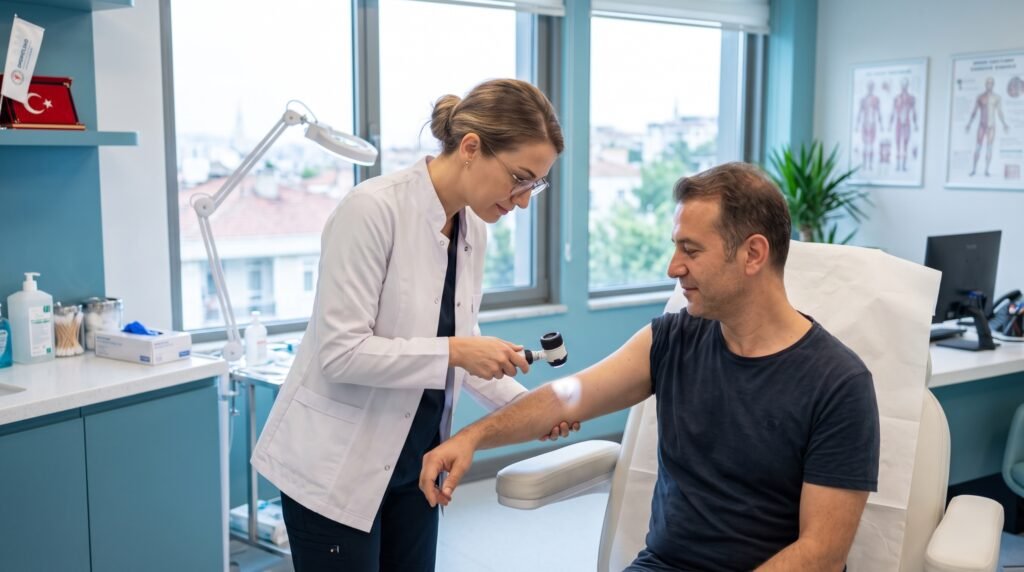
Assessing a skin condition relies significantly on examination, since much can be seen directly. The dermatologist examines the skin, often using specialized tools to look closely at lesions, takes a history of the condition and any symptoms, and, where needed, carries out tests such as a sample of the skin for examination. This careful assessment allows the dermatologist to reach an accurate diagnosis, which guides treatment. Because skin conditions can look similar yet differ in cause, this expert examination is central to proper care.
How Skin Conditions Are Treated
Treatment depends entirely on the condition and is tailored to the individual. Many skin conditions are managed with topical treatments applied to the skin, oral medication, or other approaches, while some are addressed with procedures. Cosmetic concerns may be treated with non-surgical methods. For conditions such as suspicious lesions, removal and examination may be advised. The dermatologist explains the recommended approach for the specific condition, and care may involve ongoing management for long-term skin conditions, which the specialist guides.
The Consultation and Planning
Care begins with a consultation and examination of the skin. The dermatologist assesses the condition, discusses the symptoms and history, carries out any needed tests, and explains the diagnosis and treatment options. For international patients, an initial discussion can often begin remotely through photographs and medical information, with examination during the visit, since much of dermatology depends on seeing the skin directly. The specialist advises on the approach and any ongoing care.
Dermatology Care in Turkey
Turkey is a destination for a wide range of medical care, supported by contracted hospitals in Istanbul and other cities with modern facilities and experienced specialists. For international patients, combining care with organized travel, accommodation, and support services makes the experience easier to manage, allowing attention to stay on the care of the skin.
How Orista Supports You
As a facilitator, Orista coordinates the steps around your care. Your medical information and any photographs can be reviewed by the medical team before you travel, you are matched with a suitable specialist and hospital, and a dedicated representative stays in contact throughout. Transfers, accommodation, translation, and support can be arranged so your attention stays on your health.
GOOD TO KNOW
Frequently Asked Questions
What does dermatology cover?+
It covers the skin, hair, and nails, and the conditions affecting them, from common ones such as acne and eczema to infections, allergic reactions, and more serious diseases including skin cancer. It includes both medical and cosmetic care.
What is the difference between medical and cosmetic dermatology?+
Medical dermatology diagnoses and treats skin diseases and conditions, while cosmetic dermatology focuses on the appearance of the skin, such as signs of aging and pigmentation. The two overlap, and a dermatologist may address both.
When should I have a mole checked?+
Any mole or skin spot that is new, changing in size, shape, or color, bleeding, or otherwise concerning should be assessed. Most are harmless, but checking provides reassurance and ensures anything needing attention is caught early.
How are skin conditions assessed?+
Largely through examination, often with specialized tools to look closely at lesions, along with a history and, where needed, tests such as a skin sample. This allows an accurate diagnosis, since conditions can look similar yet differ in cause.
How do I start as an international patient?+
An initial discussion can often begin remotely through photographs and medical information, with examination during the visit, since much of dermatology depends on seeing the skin directly.
This content is for general informational purposes only and does not constitute medical advice, diagnosis, or treatment. Suitability, methods, and outcomes differ from person to person. Any new, changing, or concerning skin lesion should be assessed by a qualified specialist. Please consult a qualified dermatologist for an examination and personalized guidance regarding a skin condition.