
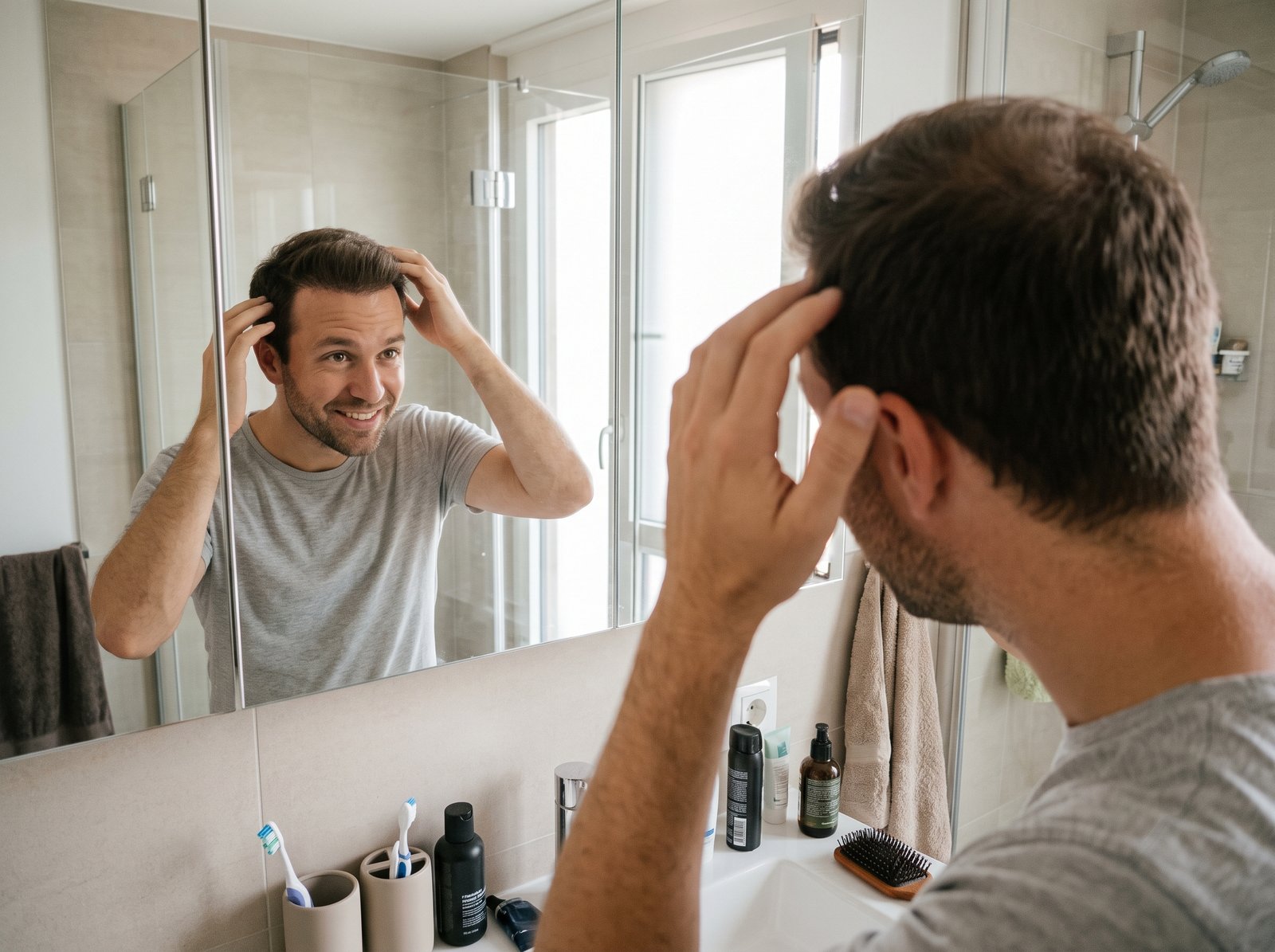
Most of what’s written about hair transplants focuses on the day of the procedure. That makes sense, since it’s the big moment. But the result you end up with depends just as much on what happens before and after: the assessment of your donor area, the choice of technique, the care in the following months and, for many people, the supportive treatments that keep existing hair healthy.
It starts with the donor area
Transplanted hair is usually taken from the back and sides of the scalp, where follicles tend to resist the hormone behind male pattern baldness. How dense and healthy that area is sets a natural limit on how much can be moved. A good clinic will tell you honestly what your donor area can support, even if it’s less than you hoped.
Choosing a technique
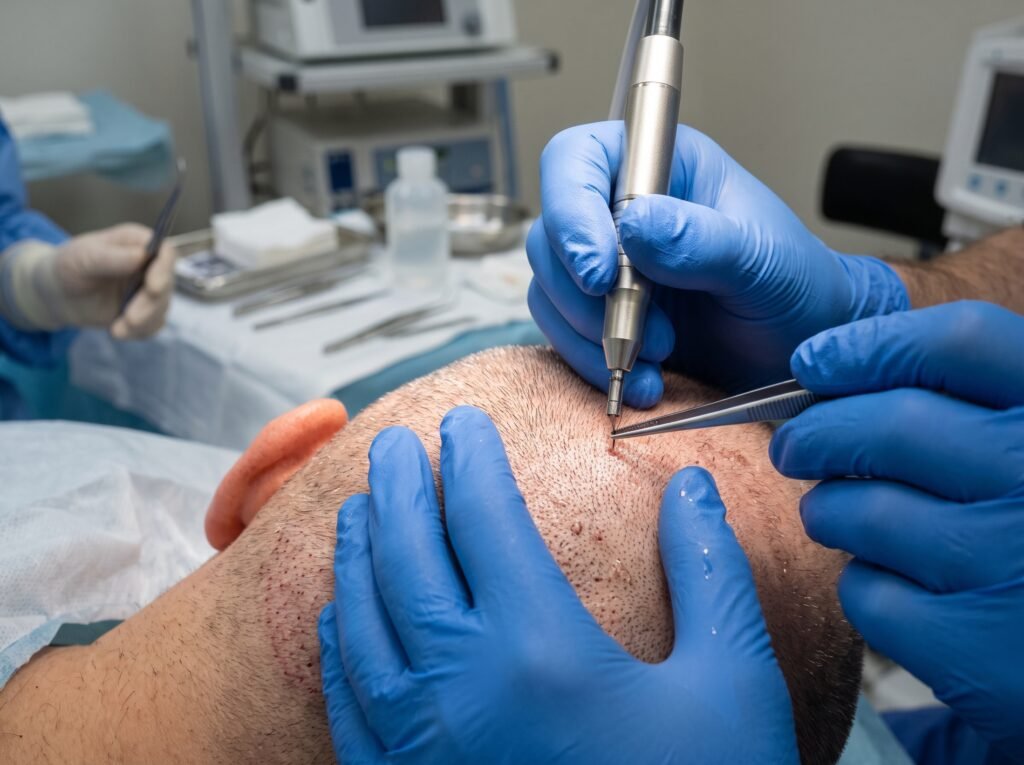
FUE Plus and DHI Plus are the two methods we’re asked about most. Both extract follicles one by one. The difference lies mainly in how they’re placed: FUE opens tiny channels first, while DHI uses a pen-like tool to implant follicles directly. Your doctor will recommend one based on your hair type, the area to be covered and the density you’re after.
Not just the scalp
Hair restoration isn’t limited to the head. Beard, mustache and eyebrow transplants use the same principle to fill patchy or thin areas. Eyebrows in particular need careful attention to the angle and direction of each hair so they look natural.
Supportive therapies
A transplant moves hair, but it doesn’t stop ongoing loss in the surrounding areas. That’s where supportive treatments come in:
- Hair mesotherapy delivers vitamins and nutrients directly to the scalp
- Stem-cell treatment and autologous micro grafts use your own tissue to support the follicle environment
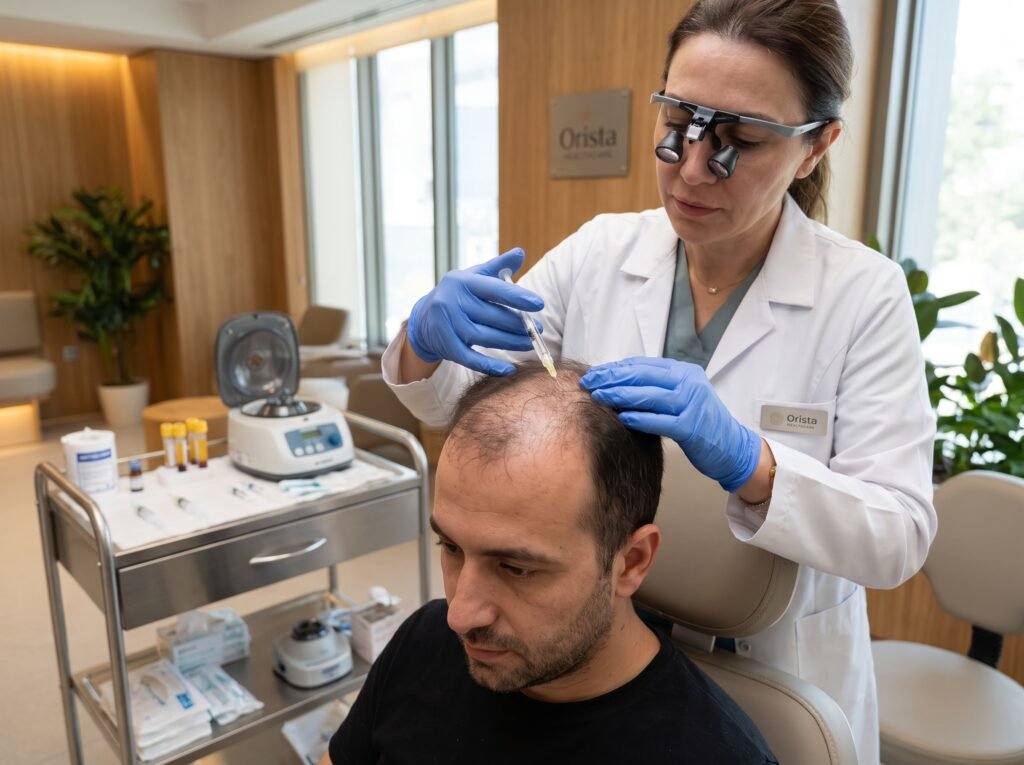
- PRP is often used alongside a transplant to support healing
These can be used on their own for people who aren’t ready for a transplant, or combined with one.
The first year, month by month
Patience is part of the process. In the first few weeks, most transplanted hairs shed. This is normal and expected. New growth usually starts around the third or fourth month, and it can take about a year to see the full result. Following the aftercare instructions closely, especially in the first two weeks, protects the grafts while they settle.
Your trip
A hair transplant usually needs only a short stay. Orista Healthcare arranges your consultation, procedure, hotel and transfers in Türkiye, and stays in touch afterward so you have someone to ask when questions come up during recovery.